
Protect your child’s eyes with the right sunglasses. Kids are more vulnerable to UV damage because their eyes absorb up to 70% more UV radiation than adults. Early exposure can lead to long-term issues like cataracts and macular degeneration. The good news? Choosing sunglasses with 100% UV protection can make a huge difference. Here’s what to know:
- UV Protection: Look for labels like "UV400" to block all UVA and UVB rays.
- Durable Frames: Materials like TPEE, TR90, or G850 bio-based plastic are lightweight, flexible, and safe for kids.
- Lens Material: Polycarbonate lenses are shatter-resistant and ideal for active children.
- Fit: Measure your child’s face to ensure a snug fit that blocks peripheral light. Use features like adjustable nose pads or wraparound frames for extra comfort.
- Additional Features: Polarized lenses reduce glare, while anti-scratch coatings and retention straps add convenience.
Investing in quality sunglasses ($30–$80) protects your child’s eyes and saves money over time. Regular cleaning and checking for damage ensure they last longer. Remember, UV protection starts early – kids as young as 6 months can benefit.
Tip: Pair sunglasses with a wide-brimmed hat for even better protection!
How to choose the right sunglasses for your child
sbb-itb-246add9
UV Protection for Kids: What You Need to Know
The sun’s UVA and UVB rays can seriously harm your child’s eyes. UVA rays (315–400 nm) penetrate deep into the eye, affecting the lens and retina, and can lead to long-term issues like cataracts and macular degeneration. UVB rays (280–315 nm), on the other hand, are absorbed by the cornea and can cause painful conditions like photokeratitis. This is why it’s essential to choose sunglasses that block both types of rays completely.
Here’s something to think about: an 8-year-old’s eye lens allows about 75% of UVA rays to pass through, compared to less than 5% for a 25-year-old. This difference shows just how vulnerable kids are to UV damage. Simply using tinted lenses isn’t enough – proper UV-blocking sunglasses are a must.
What "100% UV Protection" Actually Means
When you see labels like "100% UV protection" or "UV400", it means the lenses block all light wavelengths up to 400 nanometers, covering both UVA and UVB rays. Be cautious of vague phrases like "UV absorbing" or "blocks harmful rays" unless they specify a percentage or include "UV400" certification.
Dark lenses without a verified UV filter can actually do more harm than good. They cause the pupil to dilate, letting in more harmful UV rays. In fact, as SmileyWorld Kids explains:
"If those dark lenses do not have a verified 100% UV filter, you are effectively opening the floodgates for UVA and UVB rays to directly strike the retina."
Want to test your child’s sunglasses at home? Use a UV flashlight in a dark room. Shine it through the lenses onto a dollar bill. If the UV security watermark on the bill glows, the lenses don’t block UV rays effectively. If the watermark stays dark, the sunglasses are doing their job.
Now, let’s look at how the frames play a role in UV protection.
Why Full Coverage Matters Beyond the Lenses
Even the best lenses can’t fully protect your child’s eyes if the frames let UV rays sneak in from the sides. Standard frames often leave gaps that allow direct and reflected rays from surfaces like water, sand, or pavement to reach the eyes. Wraparound or large-frame designs help close these gaps, offering better coverage by blocking peripheral light. Pair these with a wide-brimmed hat, and you’ve got a powerful combo to reduce UV exposure.
Choosing Frame Materials That Last
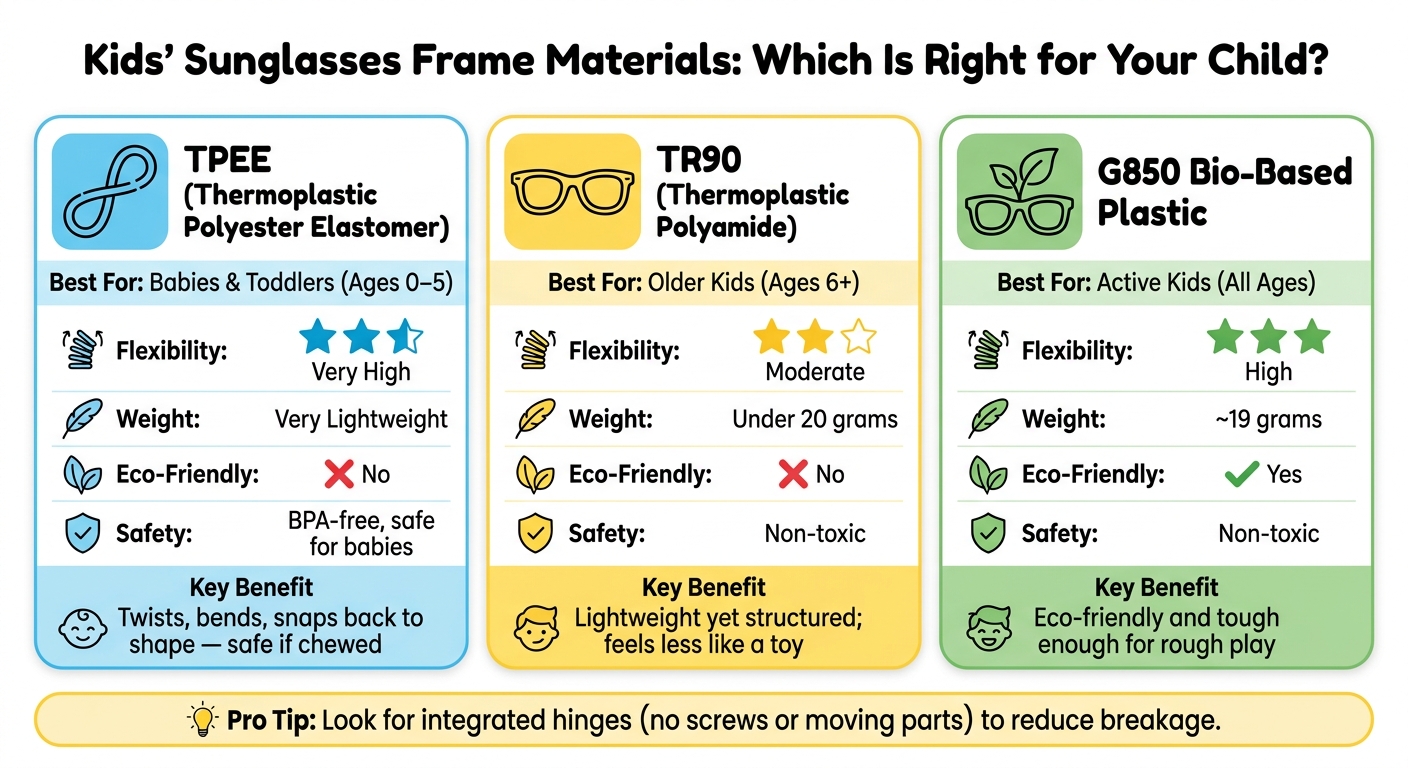
Kids’ Sunglasses Frame Materials Compared: TPEE vs TR90 vs G850
Kids’ sunglasses need to handle a lot – tossed into backpacks, dropped on hard surfaces, or even chewed on. That’s why the frame material plays a big role in whether they survive the summer or break within days.
Best Frame Materials for Kids’ Sunglasses
When it comes to durability and safety, three materials stand out: TPEE (Thermoplastic Polyester Elastomer), TR90 (Thermoplastic Polyamide), and G850 bio-based plastic. Each has its strengths, depending on the child’s age and activity level.
- TPEE (Thermoplastic Polyester Elastomer): This soft, rubber-like material is incredibly tough. It can twist, bend, and still snap back to its original shape. Since it’s BPA-free and safe for skin, it’s perfect for babies and toddlers (ages 0–5), who might chew on their sunglasses.
- TR90 (Thermoplastic Polyamide): Lightweight yet sturdy, TR90 is ideal for older kids (ages 6+). It offers a more structured look that feels less like a toy. Plus, most TR90 frames weigh under 20 grams, making them a great option for kids who are sensitive to heavier eyewear.
- G850 bio-based plastic: This newer material is designed to hold up against rough play while being eco-friendly. Frames made from G850 weigh about 19 grams and are tough enough to handle being stretched or shoved into a backpack without cracking.
| Feature | TPEE | TR90 | G850 |
|---|---|---|---|
| Flexibility | Very high | Moderate | High |
| Weight | Very lightweight | Under 20g | ~19g |
| Eco-Friendly | No | No | Yes |
| Safety | BPA-free, safe for babies | Non-toxic | Non-toxic |
Another key feature to look for is integrated hinges. Frames made as one solid piece – without screws or moving parts – are less likely to break. Loose screws and snapped hinges are common failure points, so avoiding them can save you a lot of frustration.
How to Check Frame Durability and Flexibility
Before buying, try these quick tests to make sure the sunglasses will last:
- Bend Test: Gently bend the frame. Materials like TPEE should flex easily and return to their original shape without resistance.
- Twist Test: Hold both arms of the frame and twist them in opposite directions. High-quality frames can handle a full 180-degree twist without breaking.
- Sit Test: Place the sunglasses on a soft surface and press down. Flexible frames will compress and bounce back, while rigid ones might creak or crack.
Also, check the bridge and hinges for weak spots like visible seams, glue, or metal screws. For toddlers, make sure the frames are labeled BPA-free and phthalate-free, as little ones often put them in their mouths.
While cheaper plastic frames might cost around $15, they’re often flimsy and need replacing quickly. Investing in durable options – priced between $30.99 and $79.95 – can save money in the long run. For instance, Babiators offers a 12-month "Broken Guarantee", replacing lost or broken sunglasses within the first year. That’s a clear sign they trust the quality of their materials.
Getting the Right Fit for Your Child
Even the most protective sunglasses won’t do much good if they don’t stay on your child’s face. The key to ensuring your child actually wears their sunglasses lies in finding the right fit. Here’s how to get it right.
Fit Basics: Face Shape and Bridge Width
Age labels like "0–2" or "6+" can be helpful starting points, but they’re no substitute for actual measurements. The physical dimensions of your child’s face are far more important than the suggested age range.
Start by measuring the width of your child’s face from temple to temple and noting the height of their nose bridge. Younger kids often need a lower, softer bridge or adjustable nose pads for a better fit. If your child already has a well-fitting pair of glasses or sunglasses, check the measurements printed on the inside of the frame (usually something like 42-15-110, which represents lens width, bridge width, and arm length in millimeters) and use those as a guide.
Face shape also plays an important role in how well frames fit and feel. Use this quick guide to match frame styles with face shapes:
| Face Shape | Recommended Frame Style |
|---|---|
| Round | Square or rectangular frames |
| Oval | Most shapes work well |
| Square | Round or oval frames |
| Heart | Aviators or frames with rounded edges |
The frames should sit close to your child’s face, covering it well with minimal gaps at the top and sides. Gaps can allow UV rays to sneak in, which defeats the purpose of wearing sunglasses.
Once you’ve got the basics, it’s time to watch for signs that adjustments might be needed.
Signs That Sunglasses Don’t Fit Properly
A poorly fitting pair of sunglasses will make itself known quickly – whether through your child’s discomfort or visible clues on their face. As Babiators UK explains:
"Sunglasses that are too wide can slip off during play, while frames that are too tight can leave marks and quickly become a battle to keep on."
One easy way to test the fit is with the shake test. Have your child look down and gently shake their head. If the sunglasses slide forward, the frame could be too wide, or the bridge might not suit their nose shape.
Here’s a quick breakdown of common fit problems and how to spot them:
| Fit Issue | What It Looks Like |
|---|---|
| Sliding/Slipping | Frames slide down the nose or fall off during movement |
| Red Marks | Indentations appear on the temples or behind the ears after wearing |
| Cheek Pressure | The frame rests on the cheeks or shifts when the child smiles |
| Lash Contact | Eyelashes touch the lenses, causing blinking or discomfort |
| Light Leaks | Gaps between the frame and the face allow sunlight to enter |
If your child keeps pulling their sunglasses off, it’s likely because they’re uncomfortable – not because they’re being difficult. A well-fitted pair ensures comfort and maximizes UV protection by eliminating gaps, making them far more likely to stay on during playtime.
Lens Types and Safety Features to Look For
The right lenses are just as important as a well-fitted frame when it comes to protective eyewear for kids. High-quality lenses not only enhance safety but also ensure comfort during all-day wear.
Why Polycarbonate Lenses Work Best for Kids
When it comes to lens material, polycarbonate is the top choice for children’s sunglasses. Here’s why:
As Erinn Morgan from All About Vision explains:
"Make sure your child’s sunglass lenses are made of a shatter-resistant material such as polycarbonate."
Polycarbonate lenses are not only shatter-resistant but also lightweight, making them ideal for active kids. This material won’t break into sharp fragments if impacted, which significantly reduces the risk of injury. Plus, the lighter weight ensures the sunglasses are comfortable for long periods. On the other hand, glass lenses should be avoided since they can crack or splinter when hit.
It’s also essential to look for lenses marked "UV400" or labeled as providing "100% UVA/UVB protection." While polycarbonate is a sturdy material, it doesn’t inherently block UV rays, so always double-check for proper UV protection. KiGO California emphasizes this point:
"Dark lenses without UV protection are more harmful than wearing no sunglasses at all."
Dark lenses can dilate the pupils, potentially exposing the eyes to increased UV damage if they lack proper filtering.
Beyond the material, certain design features can further enhance the durability and effectiveness of kids’ sunglasses.
Useful Features for Active Kids
Active kids need more than just good lens material – they benefit from features designed to handle their high-energy lifestyles.
- Wraparound frames: These help block UV rays from sneaking in through the sides or top of the glasses. They’re especially useful in environments with intense glare, like beaches, ski slopes, or open fields.
- Polarized lenses: Perfect for reducing glare from reflective surfaces like water, snow, or sandy areas. While polarization improves comfort and reduces eye strain, remember it doesn’t replace UV400 protection.
- Anti-scratch coatings: Kids drop things – it’s a fact of life. A scratch-resistant coating keeps lenses clear and prolongs their usability, even with everyday wear and tear.
- Retention straps: For toddlers and younger children, adjustable straps ensure the sunglasses stay secure during playtime, preventing loss or damage.
Here’s a quick reference guide to these features:
| Feature | What It Does | Best For |
|---|---|---|
| Polycarbonate Lenses | Shatterproof and lightweight | All active children |
| UV400 Label | Blocks 100% of UVA/UVB rays | Every child, every time |
| Wraparound Design | Blocks peripheral UV light | Beach, snow, high-altitude |
| Polarized Coating | Reduces glare from reflective surfaces | Water, snow, and sand |
| Anti-Scratch Coating | Protects lenses from daily wear | Daily use, all ages |
| Retention Strap | Keeps glasses secure during movement | Toddlers and active kids |
Style, Care, and Replacement Tips
Picking a Style Kids Will Want to Wear
Letting your child pick their favorite sunglasses can make all the difference. As Joslin Eye Center explains:
"Let your child pick the style, frame and color they love. This may be the single most important factor in getting a kid to wear sunglasses."
For younger kids, turning the process into a fun activity – like trying on sunglasses in front of a mirror – can make it more enjoyable. Parents also set the tone; if kids see their parents wearing sunglasses regularly, they’re more likely to follow suit. Lens color is another factor to consider. Gray lenses maintain natural color perception, making them great for everyday use, while amber or brown lenses can improve contrast during outdoor play. Once you’ve found a pair your child loves, proper care will help keep them in good shape.
How to Clean and Store Kids’ Sunglasses
Cleaning kids’ sunglasses is simple but important. Rinse the lenses with lukewarm water and a small drop of mild, non-moisturizing soap. Then, dry them with a clean microfiber cloth. Daniel Hardiman-McCartney, Clinical Adviser at The College of Optometrists, recommends:
"Before or after use each day, give them a quick clean by washing them with lukewarm water and a tiny drop of hand soap (without moisturisers) to remove dust and grit."
When not in use, store the sunglasses in a sturdy hard-shell case to protect them from scratches or damage.
When to Replace Kids’ Sunglasses
If the sunglasses have noticeable damage – like deep scratches or bent frames – or don’t fit well anymore, it’s time to replace them. Discomfort could also be a reason your child resists wearing them. Nitika Arora, M.B.B.S., Glaucoma Specialist at Mayo Clinic Health System, explains:
"If your children resist wearing glasses or sunglasses, observing their behavior, or talking to them further might give you a clue to the barriers, such as poor fit or discomfort."
Since kids grow quickly, check the fit every few months. If the temples dig into their heads or the lenses no longer fully cover their eyes, an upgrade might be needed. For children with prescription sunglasses, annual eye exams are essential to ensure their prescription stays accurate. Clinics like Cheyenne Eye Clinic and Surgery Center provide comprehensive exams to keep your child’s vision on track.
You can also do a quick lens check at home. Hold the sunglasses up to a rectangular pattern, like floor tiles, and move them side to side. If the straight lines seem to bend or wave, the lenses might be distorted and should be replaced.
Conclusion: Choosing the Right Sunglasses for Your Child’s Eyes
Protecting your child’s eyes from UV damage is a priority that starts early. With studies showing that up to 80% of lifetime UV exposure happens before the age of 18, picking the right sunglasses is more than just a fashion decision – it’s a necessity.
Here’s what to focus on: select lenses labeled "100% UV protection" or "UV400" to block harmful rays, opt for impact-resistant polycarbonate lenses for durability, and choose flexible frames that can withstand active play. A wraparound design is also a great choice, as it prevents light from sneaking in from the sides. Combine these protective features with a design your child enjoys wearing, and you’ll have a winning combination. But don’t stop there – regular vision care is just as important.
Children’s vision needs routine professional monitoring, making pediatric eye exams a must. These exams help identify any prescription needs and ensure you’re choosing the best lenses and frames for their eyes. At Cheyenne Eye Clinic and Surgery Center, board-certified optometrists and ophthalmologists can assess your child’s eye health and guide you in selecting eyewear that offers real protection.
As an added bonus, Cheyenne Eye Clinic and Surgery Center provides 35% off a complete pair of glasses when you schedule an eye exam on the same day (excluding Maui Jim and Oakley). It’s a convenient way to take care of their eye health while securing quality eyewear.
FAQs
Do kids really need sunglasses every day?
Yes, children should absolutely wear sunglasses whenever they’re outside – even on cloudy days or during the winter. UV damage accumulates over time, and consistent protection can help reduce the risk of long-term problems like cataracts, retinal damage, and skin issues around the eyes. Kids are especially at risk because their developing eyes let in more harmful UV rays than adults. Look for sunglasses labeled 100% UVA and UVB protection or UV400 to ensure their eyes are properly shielded.
How can I tell if sunglasses truly block 100% UV?
When it comes to UV protection, don’t be fooled by lens color or how dark the lenses appear. Instead, check for labels that clearly state 100% UVA and UVB protection or a UV400 rating. Steer clear of vague descriptions like "UV filter", as they might not guarantee full protection.
For precise confirmation, consider having your sunglasses tested with a photometer by an eye care professional, such as those at Cheyenne Eye Clinic and Surgery Center. And forget about those "hold up to a light" tests – they simply don’t work.
What should I do if my child refuses to wear sunglasses?
If your child refuses to wear sunglasses, it might be due to physical discomfort. Check if the frames are too tight or feel heavy on their face. To make wearing sunglasses more appealing, let them choose their own frames and favorite colors – this gives them a sense of control and makes it more enjoyable.
You can also encourage the habit by setting an example and wearing sunglasses yourself. During outdoor play, use distractions to help them forget about the glasses, or try giving the sunglasses a fun, playful name to spark their interest.