
Did you know that 1 in 4 school-aged children in the U.S. has undetected vision issues? Early detection is key to preventing long-term problems, but not all vision checks are the same.
A vision screening is a quick test to flag potential issues, often done at schools or during pediatric checkups. However, it can miss more subtle or serious conditions. A pediatric eye exam, on the other hand, is a detailed evaluation by an eye specialist that can diagnose and treat a wide range of vision and eye health problems.
Here’s a quick breakdown:
- Vision Screenings: Short, basic tests done by non-specialists to identify obvious vision problems.
- Pediatric Eye Exams: In-depth evaluations by optometrists or ophthalmologists to detect and address complex issues.
Key takeaway: If your child shows symptoms like squinting, frequent eye rubbing, or struggles with schoolwork, skip the screening and schedule a full eye exam. Early action can safeguard their vision and overall development.
| Aspect | Vision Screening | Pediatric Eye Exam |
|---|---|---|
| Duration | 5–10 minutes | 30–90 minutes |
| Who Performs It | School nurse, pediatrician | Licensed optometrist/ophthalmologist |
| Tests Included | Basic vision tests | Advanced diagnostic procedures |
| Detection | Major vision issues | Full range of eye health problems |
When in doubt, choose the more thorough option. Your child’s vision is worth it.
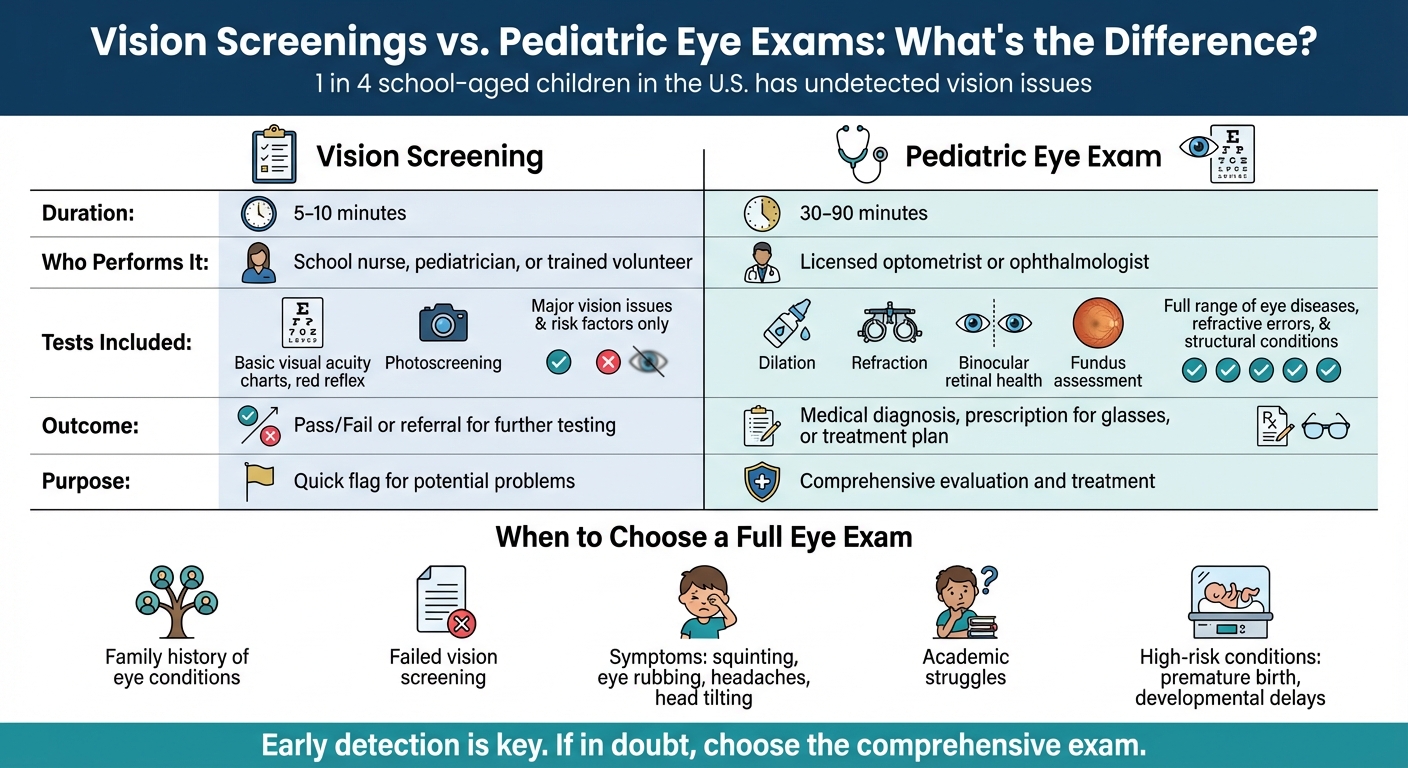
Vision Screenings vs Pediatric Eye Exams Comparison Chart
Pediatric Eye Exams: Everything You Need to Know
What is a Vision Screening?
A vision screening is a quick test designed to spot children who might need further eye evaluation. These screenings are brief, usually taking just a few minutes, and are commonly done in schools, pediatrician offices during regular checkups, or community health centers.
"Vision screening using evidence-based tools and procedures is an efficient and timely way to identify children with possible vision impairments." – Prevent Blindness
Purpose of Vision Screenings
The main goal of vision screenings is to catch noticeable vision problems that could affect a child’s daily life and learning. They aim to identify issues like nearsightedness (myopia), farsightedness (hyperopia), astigmatism, or significant eye misalignment (strabismus). These screenings are not intended to replace comprehensive eye exams but to flag children who might need one.
Who Conducts Vision Screenings?
Vision screenings are typically carried out by non-specialists such as pediatricians, family doctors, school nurses, or trained volunteers, rather than eye care professionals. For younger children who can’t yet read an eye chart, technicians often use automated devices called photoscreeners to evaluate their vision. In newborns, the first screening usually happens in the hospital shortly after birth, where medical staff check for the red reflex, pupil reaction, and blink response.
While these screenings are helpful, they do have their limitations.
Limitations of Vision Screenings
Vision screenings are not a substitute for a comprehensive eye exam and may miss more subtle or complex conditions. For example, instrument-based screenings focus on identifying risk factors rather than measuring exact visual acuity. This means a child with conditions like retinal disease or optic nerve issues could still pass the test. Additionally, screenings might overlook problems such as binocular vision deficits, convergence insufficiency, or amblyopia. They can also be less effective for children who are unable to complete the test.
"Vision screenings however, do not replace comprehensive eye examinations and cannot be expected to detect all vision and eye health problems." – American Academy of Optometry
Because of these limitations, any failed screening – or an "untestable" result – should always be followed up with a comprehensive eye exam by an optometrist or ophthalmologist. This ensures that any underlying issues are properly diagnosed and addressed.
What Is a Pediatric Eye Exam?
A pediatric eye exam is a detailed evaluation performed by an eye specialist to identify vision and medical issues. It goes beyond simply checking if a child needs glasses, offering insights into their overall health as well.
"A vision screening can indicate that you need to get an eye exam, but it does not serve as a substitute for a comprehensive eye exam." – Colorado Eye Center
These exams generally take about 60–90 minutes and often involve dilating the eyes. Unlike basic screenings, specialists use advanced tools and techniques to detect problems that might otherwise remain hidden until they become more severe. The upcoming sections break down the main components, who should get these exams, and how often they should be done.
Components of a Pediatric Eye Exam
A pediatric eye exam includes several important steps:
- Visual acuity testing: This checks how well a child can see using age-appropriate charts.
- Binocular function and alignment tests: These identify issues like strabismus (crossed eyes) or other alignment problems.
- Eye health assessments: Techniques like red reflex testing can reveal conditions such as cataracts or retinoblastoma. Specialists also measure eye pressure to screen for glaucoma, and pupil dilation is used to thoroughly examine the retina.
- Neurological and corrective lens evaluations: These tests assess overall eye-brain coordination and determine if glasses are needed.
Who Should Get a Pediatric Eye Exam?
Comprehensive eye exams are essential for children who fail vision screenings or show symptoms like squinting, tilting their head, frequent eye rubbing, or recurring headaches. Children at higher risk – such as premature infants, those with developmental delays, or those with a family history of eye disorders – should receive regular, timely evaluations.
Early detection is key. For example, if retinoblastoma is caught early, cure rates exceed 90%. Similarly, treating amblyopia (lazy eye) before age seven can prevent permanent vision loss.
Frequency of Exams
Eye health checks should begin right after birth, with newborns screened in the nursery for infections and abnormal reflexes. A full eye exam is recommended between 6–12 months to assess eye health, alignment, and development. By ages 3–5, children should have at least one formal visual acuity test and a complete eye examination. After age five, annual vision screenings are suggested, with more comprehensive exams scheduled as needed.
Children with existing eye conditions or additional risk factors may require more frequent visits to monitor their vision and overall eye health.
Key Differences: Vision Screenings vs. Pediatric Eye Exams
While both vision screenings and pediatric eye exams focus on children’s eye health, they differ greatly in scope and purpose. Vision screenings are quick assessments designed to flag potential eye problems, whereas pediatric eye exams provide a thorough diagnosis and treatment plan for any identified issues.
Screenings are typically conducted by non-specialists, such as pediatricians, school nurses, or trained volunteers, using basic tools like eye charts or photoscreeners. In contrast, comprehensive eye exams are performed by licensed professionals, such as optometrists or ophthalmologists, who use advanced diagnostic methods.
The testing methods also vary significantly. Screenings rely on basic evaluations, while comprehensive exams include procedures like dilation, manual refraction, and detailed binocular testing. These advanced techniques allow exams to uncover more subtle conditions, such as convergence insufficiency or structural abnormalities, which screenings may overlook. The table below highlights these distinctions.
Comparison Table: Vision Screenings vs. Pediatric Eye Exams
| Aspect | Vision Screening | Pediatric Eye Exam |
|---|---|---|
| Duration | 5–10 minutes | 30–90 minutes |
| Personnel | School nurse, pediatrician, or volunteer | Licensed optometrist or ophthalmologist |
| Tests Performed | Visual acuity charts, red reflex, or photoscreening | Dilation, refraction, binocular testing, and retinal health assessment |
| Detection Capabilities | Major vision issues and risk factors | Full range of eye diseases, refractive errors, and structural conditions |
| Outcome | Pass or referral for further testing | Medical diagnosis, prescription for glasses, or treatment plan |
sbb-itb-246add9
When to Choose Pediatric Eye Exams Over Vision Screenings
If your five-year-old struggles to read the 20/30 line on a vision chart or has a two-line difference in visual sharpness between their eyes, it’s time for a full eye exam. While screenings can catch some issues, a comprehensive evaluation by an eye care professional often provides a clearer picture of your child’s eye health. In some cases, skipping the screening and going straight to an exam is the better choice.
Family history plays a big role in deciding when to opt for a full exam. If there’s a history of amblyopia, childhood cataracts, glaucoma, or retinoblastoma in the family, your child’s risk increases. Similarly, children with close relatives who have strabismus or significant refractive errors should be directly referred for a detailed eye evaluation.
Physical signs can also signal the need for a comprehensive exam. Watch for symptoms like red, itchy, or watery eyes, discharge, drooping eyelids, or misaligned eyes. Behavioral signs are just as telling – squinting, frequent eye rubbing, tilting the head to see better, covering one eye, or holding objects like books or tablets very close to their face. Complaints of headaches after schoolwork, eye pain, or blurry and double vision should prompt an immediate visit to an eye doctor.
Vision issues that go undiagnosed can impact your child’s academic performance. This is especially true for children with Individualized Education Programs (IEPs), who are at a higher risk of vision problems. Even if they pass a screening, a full exam can uncover issues that screenings might miss, such as challenges with near vision or eye coordination.
Certain conditions put children at an even higher risk and call for a proactive approach. Premature birth, Down syndrome, cerebral palsy, autism spectrum disorders, and ADHD are examples of situations where comprehensive exams are essential. These evaluations go beyond the limits of basic screenings, offering a deeper understanding of your child’s visual health.
Benefits of Pediatric Eye Exams at Cheyenne Eye Clinic and Surgery Center
Cheyenne Eye Clinic and Surgery Center stands out when it comes to safeguarding your child’s eye health, offering services that go well beyond basic screenings.
Comprehensive Care for Every Stage of Childhood
Since 1903, Cheyenne Eye Clinic and Surgery Center has been a trusted provider of eye care, adapting its services to meet the needs of patients of all ages. From picture-based exams for toddlers to advanced treatments like laser vision correction for older kids, they offer a full spectrum of care. This continuity allows families to build strong, long-term relationships with providers who truly understand their child’s changing visual needs. With a team of board-certified ophthalmologists and optometrists, they handle everything from routine check-ups to intricate surgical procedures, ensuring your child receives expert care at every step. This all-encompassing approach addresses gaps that basic vision screenings simply can’t cover.
Expertise You Can Rely On
The clinic’s specialists use advanced diagnostic tools to provide a detailed picture of your child’s eye health – far beyond what school screenings can offer. While typical screenings often focus solely on distance vision, comprehensive exams at Cheyenne Eye Clinic assess critical factors like eye alignment, depth perception, color vision, and the overall health of the eyes. For younger children who can’t yet read letters, the clinic uses LEA symbols – simple images like apples or houses – to accurately measure visual acuity. This level of precision is essential because approximately 7% of children under 18 have a diagnosed eye condition. The clinic’s board-certified experts are skilled at identifying subtle issues such as convergence insufficiency or early signs of amblyopia that might go unnoticed in basic screenings.
Convenience Tailored for Families
Cheyenne Eye Clinic offers a family-friendly experience with on-site optical and surgical services. This means you can handle everything – eye exams, selecting glasses (with discounts like 35% off select frames), and scheduling treatments – without extra trips. If your child needs treatment for conditions like infantile cataracts or severe strabismus, the surgical center is fully equipped to provide care. Their child-focused techniques ensure young patients feel at ease throughout the process, making care accessible and stress-free for families.
Conclusion: Choosing the Right Option for Your Child
Vision screenings are helpful for spotting potential issues, but they can’t replace the depth and accuracy of a comprehensive pediatric eye exam performed by a licensed professional. As the American Academy of Optometry explains, "Vision screenings however, do not replace comprehensive eye examinations and cannot be expected to detect all vision and eye health problems". Early detection is crucial because untreated conditions, like amblyopia, can cause permanent vision problems if not addressed before the age of seven. This highlights the importance of scheduling timely, detailed evaluations.
Your child’s growth and learning heavily rely on early intervention. Vision problems that go unnoticed can hinder academic progress and affect self-esteem. If your child shows signs like squinting, tilting their head, or struggling with schoolwork, it’s essential to arrange a comprehensive eye exam without delay. For children in higher-risk groups – such as those with neurodevelopmental disorders or a family history of eye conditions – skipping screenings and opting for a full evaluation is especially important.
When it comes to your child’s vision, expert care is non-negotiable. Cheyenne Eye Clinic and Surgery Center provides specialized, family-centered care with board-certified professionals who can identify issues that screenings might miss. Their thorough approach includes tailored exams for young children and detailed assessments of eye alignment and internal health, ensuring nothing is overlooked. Choosing professional care over basic screenings can make a lasting difference in your child’s eye health and overall development.
FAQs
How do I know if my child needs a full eye exam instead of a basic vision screening?
While basic vision screenings can catch some problems, there are specific signs that might mean your child needs a more detailed eye exam. Look out for symptoms such as constant squinting, frequent eye rubbing, tilting their head to see better, covering one eye while reading, or complaints about headaches and eye strain. Struggling with reading, poor hand-eye coordination, frequent clumsiness, or noticeable drops in school performance or confidence may also point to vision issues.
A comprehensive pediatric eye exam goes far beyond what a standard screening can uncover. It evaluates key aspects like eye alignment, focusing ability, muscle function, and overall eye health. These exams can detect conditions such as amblyopia (commonly known as lazy eye), refractive errors, or other issues that could affect your child’s learning and development. At Cheyenne Eye Clinic and Surgery Center, our pediatric eye exams provide an in-depth evaluation to safeguard your child’s vision and help them thrive both in school and everyday activities.
How often should my child get a comprehensive eye exam?
It’s important to schedule a detailed eye exam for children at key milestones: shortly after birth, before their first birthday, at ages 3 and 5, and then every 1–2 years as they grow. These exams play a crucial role in catching vision problems early and supporting healthy eye development.
Unlike standard vision screenings, these thorough exams go beyond just checking eyesight. They provide an in-depth look at your child’s overall eye health, uncovering potential issues that a basic screening might miss. As kids grow and their visual needs evolve, keeping up with regular eye exams ensures their eyes are developing properly and functioning at their best.
Why are comprehensive eye exams essential for children with developmental delays or a family history of eye conditions?
Comprehensive eye exams are especially important for children with developmental delays or a family history of eye conditions because vision plays a key role in brain development during early childhood. The brain relies on clear and balanced input from both eyes to develop the neural pathways essential for sight, learning, and motor skills. If issues like amblyopia, strabismus, or refractive errors go undetected, they can interfere with this process, potentially leading to developmental delays, learning difficulties, and challenges in school.
When there’s a family history of eye conditions such as congenital cataracts, glaucoma, or retinal diseases, the likelihood of inheriting these problems increases. Regular, detailed eye exams are vital for catching these conditions early, allowing for timely treatment that can prevent lasting vision problems. This proactive care supports a child’s ability to grow socially, academically, and overall. At Cheyenne Eye Clinic and Surgery Center, we specialize in pediatric eye care to ensure every child gets the support they need to succeed.