
Vision screenings and eye exams are not the same. Screenings are quick checks to spot obvious vision issues, often done by non-specialists in schools or workplaces. They don’t diagnose or treat problems. Eye exams, however, are detailed evaluations performed by licensed professionals. These exams assess your vision, detect eye diseases, and can reveal signs of over 270 health conditions like diabetes or high blood pressure. Regular eye exams are essential for maintaining eye health and catching issues early.
Key Points:
- Vision Screenings: Quick, basic tests (5–10 minutes), often by non-specialists. Detects major vision issues but misses deeper problems.
- Eye Exams: Detailed evaluations (30–60 minutes) by optometrists or ophthalmologists. Diagnoses eye diseases and systemic conditions.
- Regular eye exams are recommended even if you pass a screening.
Quick Comparison:
| Factor | Vision Screening | Eye Exam |
|---|---|---|
| Purpose | Spot potential issues | Diagnose and treat conditions |
| Who Performs It | Non-specialists | Licensed eye doctors |
| Time Required | 5–10 minutes | 30–60 minutes |
| Conditions Detected | Basic vision problems | Eye diseases, systemic issues |
While screenings are helpful for identifying basic problems, they cannot replace the thorough evaluation provided by an eye exam. Schedule regular exams to protect your vision and overall health.
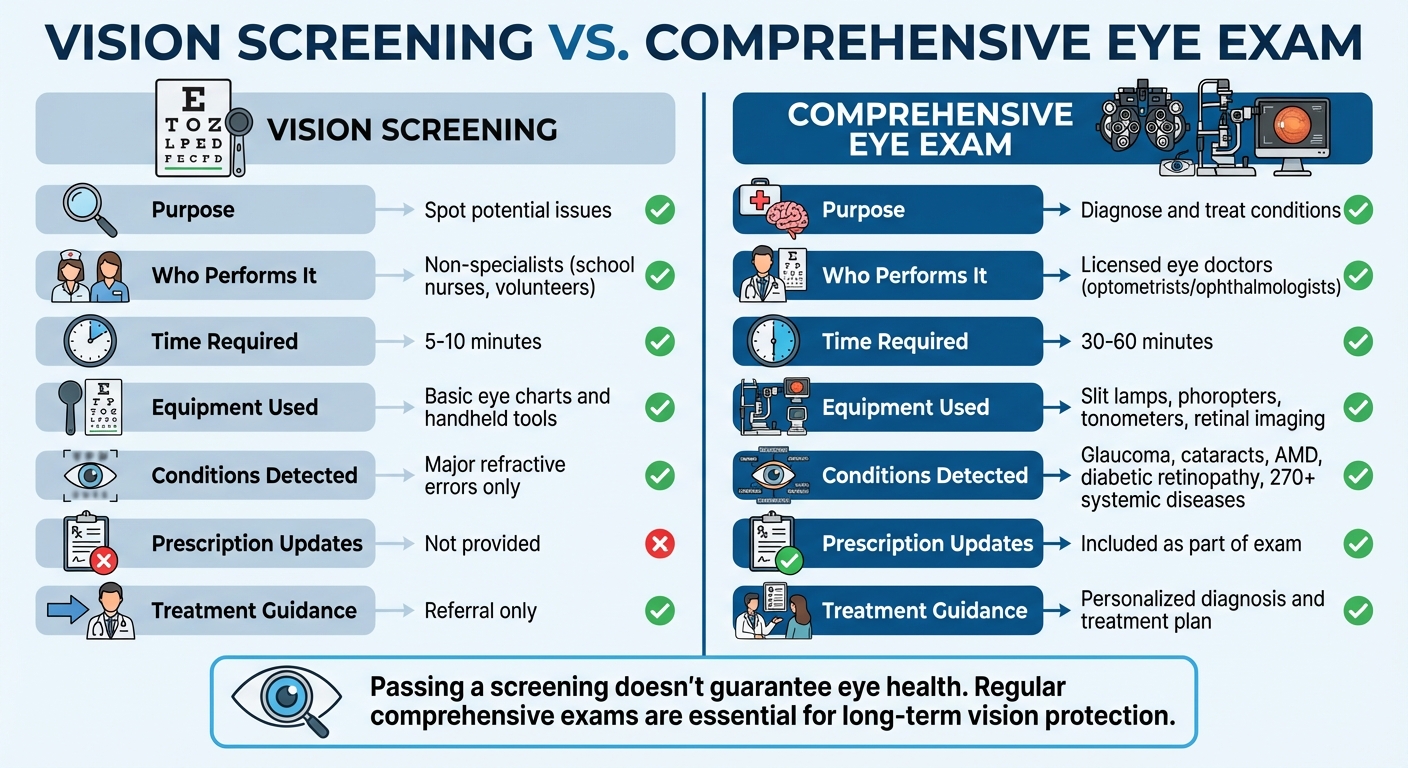
Vision Screening vs Comprehensive Eye Exam Comparison Chart
Vision Screening vs. Eye Exam: What’s the Difference? | DeltaVision
sbb-itb-246add9
What Is a Vision Screening?
A vision screening is a quick test designed to spot potential vision problems that might need further evaluation. It’s not a full diagnostic exam but rather a preliminary check. These screenings typically take about 5–10 minutes and aim to identify individuals who should seek a more thorough eye exam.
The purpose of a vision screening isn’t to diagnose or treat specific conditions. Instead, it flags potential issues, acting as a first step. As MedlinePlus puts it:
A vision screening is a quick way to find out if you need a comprehensive (complete) eye exam.
These screenings can detect common vision issues like nearsightedness, farsightedness, and astigmatism. For children, screenings may also help identify conditions such as amblyopia (lazy eye) or strabismus (crossed eyes). Let’s look at who performs these screenings and what they typically measure.
Who Performs Vision Screenings?
Vision screenings are usually conducted by non-specialists. This includes school nurses, pediatricians, family doctors, primary care providers, trained technicians, or certified volunteers at community health events. You might encounter these screenings in various settings, such as schools, primary care offices, community health fairs, the DMV, or workplace wellness programs. While these screenings are convenient and accessible, they come with a limited scope of evaluation.
What Do Vision Screenings Test?
Screenings often assess visual acuity using an eye chart, either placed 20 feet away (for distance vision) or held at 14 inches (for near vision). Some screenings might also include additional tests, such as:
- Checking pupil response to light
- Assessing eye alignment
- Testing color vision
- Using photoscreening tools to detect refractive errors (especially helpful for young children who can’t read yet)
Results are typically “pass” or “fail,” with a referral to an eye doctor if further evaluation is needed. Now, let’s explore the limitations of these brief tests.
Limitations of Vision Screenings
Vision screenings are not designed to evaluate overall eye health. They focus on identifying obvious issues and may overlook serious conditions like glaucoma, cataracts, macular degeneration, or diabetic retinopathy. These diseases often develop without noticeable early symptoms and can’t be detected through a simple eye chart test.
Dr. Russel Lazarus, an optometrist, highlights this concern:
Vision screenings do not tell the whole story. Your child may ‘pass’ a school vision screening, but still have an undiagnosed vision problem.
Additionally, factors like poor testing conditions can affect the accuracy of results. Since screenings are often conducted by non-specialists, subtle problems that an eye doctor might catch could be missed. A passing result might give a false sense of security, implying complete eye health when, in reality, the test only ruled out obvious issues. These limitations emphasize the importance of comprehensive eye exams for a thorough evaluation.
What Is a Full Eye Exam?
A full eye exam is a thorough evaluation of your vision and overall eye health, typically conducted by an optometrist or ophthalmologist. This process, which takes about 30 to 60 minutes, uses advanced diagnostic tools to uncover issues that a quick vision screening might miss. It provides a complete understanding of both your ocular health and potential systemic conditions.
What Happens During an Eye Exam?
The exam begins with your doctor reviewing your medical and family history, as well as any medications you’re taking. From there, several tests are performed, including:
- Visual acuity testing: Using a Snellen chart to measure how well you see at various distances.
- Refraction testing: Done with a phoropter to determine your prescription for glasses or contact lenses.
- Tonometry: Measures intraocular pressure to screen for glaucoma.
- Slit-lamp exam: Examines the front parts of your eye, such as the cornea, iris, and lens.
Additional tests might check your depth perception, color vision, and peripheral vision to ensure your eyes are functioning together properly.
Dilation is another key part of the exam. Eye drops are used to widen your pupils, allowing the doctor to examine internal structures like the retina, macula, and optic nerve. After dilation, your vision may become blurry and sensitive to light, so bringing sunglasses and arranging for a ride home is a good idea.
Conditions Detected by Eye Exams
A comprehensive eye exam can uncover much more than just vision issues. It can detect conditions like glaucoma, cataracts, age-related macular degeneration (AMD), and diabetic retinopathy. In children, it may identify amblyopia (lazy eye) and strabismus (crossed eyes).
Interestingly, because the eye’s blood vessels and nerves are visible during a dilated exam, early warning signs of over 270 systemic diseases – including diabetes, heart disease, and even some cancers – can also be identified.
Who Should Get an Eye Exam?
The frequency of eye exams depends on your age and risk factors. Here’s a general guideline:
- Children: First exam when they start learning the alphabet, then every 1–2 years.
- Adults aged 20–39: One exam during their 20s and two in their 30s.
- Ages 40–54: Every 2 to 4 years.
- Ages 55–64: Every 1 to 3 years.
- Seniors 65 and older: Every 1 to 2 years.
If you have specific risk factors – like diabetes, high blood pressure, a family history of eye disease, or you wear contact lenses – annual exams are often recommended. Regular check-ups are crucial for catching issues early and preserving your vision.
Main Differences Between Vision Screenings and Eye Exams
Building on earlier points, let’s dive into the key differences between vision screenings and full eye exams.
Although both focus on your eyes, they serve very different purposes. A vision screening is like a quick "pass/fail" test – think of it as the eye care equivalent of a blood pressure check at a pharmacy. It helps identify people who might need further evaluation but doesn’t provide a diagnosis. On the other hand, a comprehensive eye exam is a detailed diagnostic process carried out by a licensed professional.
The scope of these services also varies significantly. Vision screenings are brief and mainly assess visual acuity – how well you can see from a distance, like reading letters on an eye chart. These tests usually take no more than 5 to 10 minutes. In contrast, comprehensive exams involve advanced tools such as slit lamps, phoropters, tonometers, and retinal imaging. These tools allow the practitioner to examine both the external and internal parts of your eye, including the retina, optic nerve, and blood vessels. This thorough process typically lasts 30 to 60 minutes and evaluates both the neurological and physical health of your eyes.
"Vision screenings are quick tests designed to identify obvious vision problems, while comprehensive eye exams provide thorough evaluations of both your vision and overall eye health." – Cannon EyeCare
Screenings are designed to catch major refractive errors, but they don’t go beyond surface-level issues. Comprehensive exams, however, can detect early signs of silent eye diseases and even systemic health conditions. Here’s an important takeaway: passing a screening doesn’t guarantee your eyes are healthy. It only means your vision was adequate at that moment. A full eye exam, on the other hand, can uncover over 270 systemic health issues, including diabetes, high blood pressure, and even early indicators of Alzheimer’s disease.
Comparison Table: Vision Screenings vs. Eye Exams
| Factor | Vision Screening | Comprehensive Eye Exam |
|---|---|---|
| Purpose | Identify potential vision issues for referral | Diagnose eye diseases and determine prescriptions |
| Who Performs It | School nurses, volunteers, or primary care staff | Licensed optometrists or ophthalmologists |
| Equipment Used | Basic eye charts and handheld tools | Slit lamps, phoropters, tonometers, retinal imaging |
| Time Required | 5–10 minutes | 30–60 minutes |
| Conditions Detected | Major refractive errors only | Glaucoma, cataracts, AMD, diabetic retinopathy, systemic diseases |
| Prescription Updates | Not provided | Included as part of the exam |
| Treatment Guidance | Referral only | Personalized diagnosis and treatment plan |
This comparison highlights why comprehensive exams are crucial for long-term eye health. While screenings can flag obvious issues, they don’t offer the depth of a full exam. Even if you pass a screening, regular eye exams are still essential to safeguard both your vision and your overall health.
Why Full Eye Exams Matter
Comprehensive eye exams play a key role in safeguarding both your vision and overall health. Let’s take a closer look at why they’re so important.
Early Detection of Serious Eye Conditions
Unlike quick screenings, full eye exams can uncover hidden problems that might otherwise go unnoticed. Many eye diseases progress silently until they cause irreversible damage. Take glaucoma, for instance – it’s often called the "silent thief of sight" because most people don’t realize there’s an issue until their vision has already been significantly affected.
Comprehensive exams use advanced techniques like tonometry to measure eye pressure and pupil dilation to closely examine the retina. These tests can detect early signs of conditions such as glaucoma, macular degeneration, cataracts, and diabetic retinopathy before symptoms become apparent. Early intervention is critical – 90% of diabetics, for example, can prevent or delay blindness caused by diabetic retinopathy with timely treatment. For the 2 million Americans living with age-related macular degeneration in 2024, catching the condition early during an exam can make all the difference in preserving their vision.
But the benefits don’t stop at eye health. Full exams can also reveal early warning signs of systemic conditions, offering insights that extend well beyond just vision care. This makes them an essential part of proactive health management.
Customized Vision Care
Comprehensive eye exams go beyond simply determining whether you need glasses or not – they provide tailored solutions to meet your specific vision needs. Unlike basic screenings, which offer a simple pass-or-fail result, full exams deliver a precise prescription for eyeglasses or contact lenses. They also include detailed measurements to ensure your contact lenses fit comfortably and correctly.
If you spend a lot of time in front of digital screens, a full exam can address issues like digital eye strain by recommending specialized computer lenses or blue light management strategies. Additionally, these exams are an opportunity to tackle specific concerns like dry eye syndrome or to explore myopia management options for children. Your eye care provider can also offer personalized advice, such as tips for UV protection if you’re outdoors often or ways to manage seasonal dry eye. This level of individualized care ensures your eyes stay healthy and comfortable – something a quick vision screening simply can’t provide.
Conclusion: Choosing the Right Option for Your Vision Needs
Understanding the difference between vision screenings and comprehensive eye exams is key to protecting your long-term eye health. While screenings can help identify obvious issues, they’re no substitute for the in-depth evaluation that a full eye exam provides. Screenings simply highlight the need for further testing – they can’t diagnose diseases or uncover hidden conditions.
"The choice between a basic screening and comprehensive professional care isn’t just about seeing today; it’s about preserving your vision for life." – Cannon EyeCare
Comprehensive eye exams go beyond basic screenings. They can catch early signs of serious conditions, provide precise prescriptions tailored to your lifestyle, and even reveal indicators of broader health problems. For most healthy adults, experts recommend an exam every one to two years. Individuals over 65, however, should aim for annual exams to monitor for age-related changes.
Even if a recent screening showed no issues, regular comprehensive exams are still your best defense against preventable vision loss. This is especially critical when you consider that many people – like one in four children in the U.S. – may have undiagnosed vision problems.
Taking action now ensures your eyes are cared for by professionals who can help safeguard your vision.
How Cheyenne Eye Clinic and Surgery Center Can Help
At Cheyenne Eye Clinic and Surgery Center, you’ll find comprehensive eye care delivered by board-certified ophthalmologists and optometrists. Using advanced diagnostic tools, they thoroughly assess every aspect of your eye health. Whether you need a routine exam, a prescription update, or treatment for conditions like glaucoma, cataracts, or dry eye, their team creates personalized care plans to meet your needs.
With a full-service optical center and on-site surgical facilities, they offer everything from glasses and contact lenses to advanced laser vision correction and surgical procedures – all in one place. Schedule your comprehensive eye exam today and take the first step toward maintaining healthy vision for years to come.
FAQs
If I passed a vision screening, why do I still need an eye exam?
Passing a vision screening might seem sufficient, but it doesn’t take the place of a comprehensive eye exam. Screenings are designed to catch clear-cut vision problems, but they often miss deeper issues. An eye exam goes beyond just checking your eyesight – it assesses your overall eye health and can detect conditions like glaucoma or cataracts that screenings might overlook. Even if your vision feels fine, regular eye exams are crucial for safeguarding your long-term eye health.
How often should I get a full eye exam for my age?
If you’re 40 or older, it’s recommended to schedule a comprehensive eye exam every 1-2 years. For adults between 40 and 54, exams can typically be spaced out every 2-4 years. However, factors like age, symptoms, or specific risk factors might require more frequent check-ups. Always consult your eye care provider to determine the best schedule for your needs.
Do I need my eyes dilated during an eye exam?
During an eye exam, dilating your pupils is a common practice that allows doctors to get a closer look at the back of your eyes. Special eye drops are used to temporarily widen the pupils, making it easier to spot potential eye issues early. This step is an essential part of a thorough eye exam and can reveal important details about your overall eye health.