
For dry eye relief, I recommend starting with an eye exam, a medication review, and a daily care routine – not just occasional drops. Dry eye becomes more common after age 50, and treatment depends on whether your eyes make too few tears, lose tears too fast, or both.
Here’s the plan I suggest discussing with your eye doctor:
- Start with safe home care: Artificial tears, warm compresses, clean eyelids, and less exposure to wind, smoke, and dry air.
- Ask about more treatment if needed: Prescription drops, tear-duct plugs, or gland treatments may help. Severe cases may need specialist care.
- Track your results: Note symptoms, side effects, and trouble using drops. Keep follow-up visits, even when you feel better.
Don’t stop prescribed medicines on your own. And <u>sudden vision loss or severe eye pain needs emergency care</u> – not another dose of artificial tears.
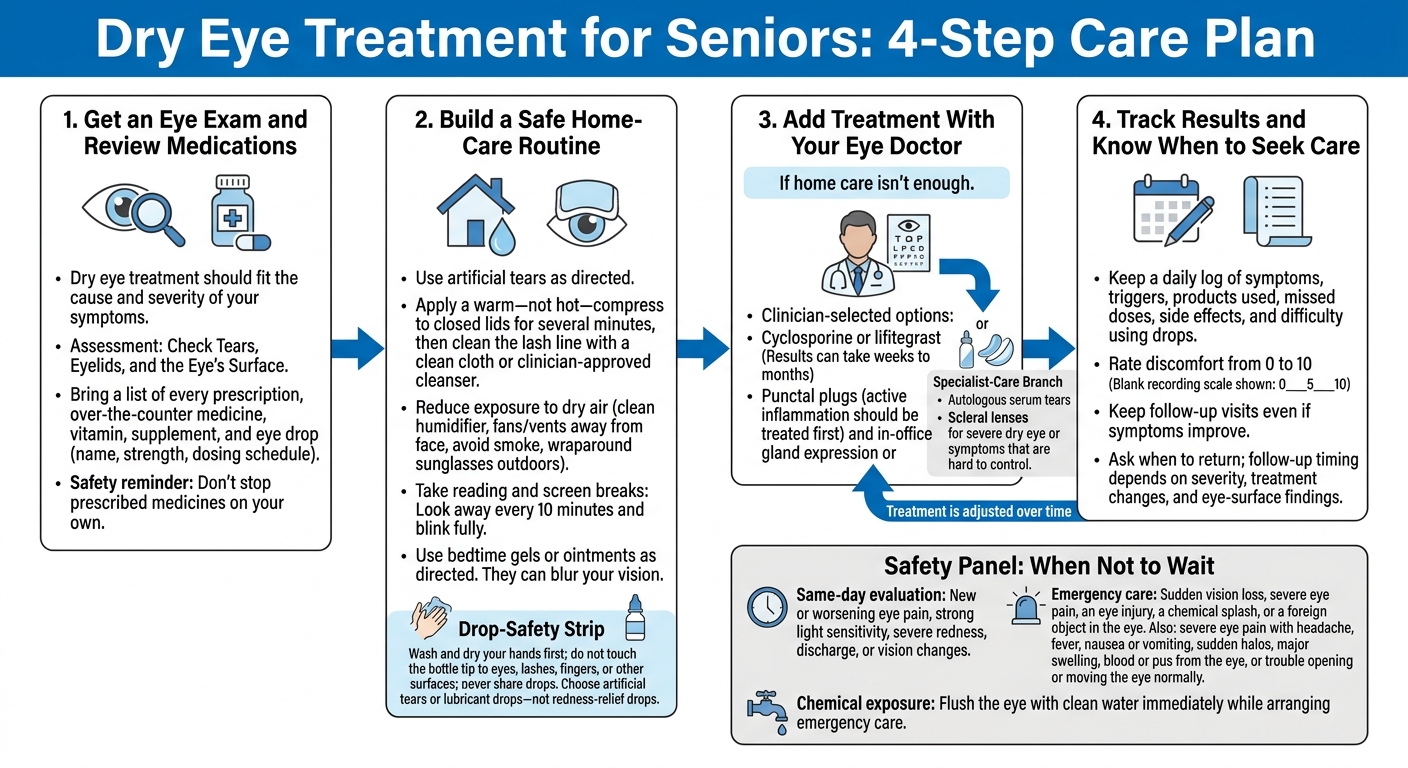
Dry Eye Treatment for Seniors: 4-Step Care Plan
Step 1: Get an Eye Exam and Review Medications
Dry eye treatment should fit the cause and severity of your symptoms. Start with an eye exam and medication review to help your doctor decide what to try next.
Check Tears, Eyelids, and the Eye’s Surface
Your doctor may use a Schirmer test to measure tear production and check how quickly your tear film breaks down. They’ll also check your blinking, eyelid position, and meibomian glands – the oil glands that slow tear evaporation.
Using a slit lamp and dye, your doctor can check the cornea and conjunctiva for irritation or damage. The findings help determine whether you’re making too few tears, your tears are evaporating too fast, or another eye problem is causing the dryness. Tell your doctor about any eye surgery, contact lens use, diabetes, thyroid disease, or autoimmune disease.
Bring Your Medication List
Bring a list of every prescription, over-the-counter medicine, vitamin, supplement, and eye drop you use. Include each product’s name, strength, and dosing schedule, along with anything you recently started or stopped. Don’t leave out allergy or cold medicines.
Some antihistamines, decongestants, antidepressants, and blood pressure medicines can worsen dryness. Ask your eye doctor and prescribing clinician whether any changes would be appropriate.
A caregiver can help you record whether symptoms affect one or both eyes, what triggers them, and whether blinking or drops help. Also mention trouble squeezing the bottle, aiming drops, or remembering doses, as well as blurred vision after using drops. These details help your doctor choose a plan you can follow correctly.
sbb-itb-246add9
Step 2: Build a Safe Home-Care Routine
After your exam, build a daily routine to slow tear evaporation and protect the tear film.
- Use artificial tears as directed. Choose preservative-free drops if you need drops often or they sting.
- Apply a warm – not hot – compress to closed lids for several minutes. Then clean the lash line with a clean cloth or clinician-approved cleanser.
- Reduce exposure to dry air. Use a clean humidifier, point fans and vents away from your face, avoid smoke, and wear wraparound sunglasses outdoors.
- Take reading and screen breaks. Look away every 10 minutes and blink fully.
- Use bedtime gels or ointments as directed. They can blur your vision.
Compare Dry Eye Treatments
| Treatment option | Typical role | Important considerations | When professional guidance is needed |
|---|---|---|---|
| Artificial tears | Temporary lubrication | Follow label directions | Frequent need or persistent irritation |
| Gels and ointments | Longer-lasting relief | Wait until vision clears before walking, using stairs, or driving | Product selection or concerns about blurred vision |
| Warm compresses and lid hygiene | Supports eyelid oil flow | Avoid rubbing, pressure on the eyes, and dirty cloths | Pain, swelling, or no improvement |
| Indoor and outdoor changes | Reduces evaporation and irritation | Clean humidifiers as instructed and replace water regularly | Symptoms continue despite changes |
Use this chart as a guide. Your eye doctor should direct prescription and in-office treatment.
Use Eye Drops Safely
Wash and dry your hands first. Don’t let the bottle tip touch your eyes, lashes, fingers, or other surfaces. Close the container after use, and never share it. Follow label directions for dosing, storage, expiration, and disposal, including when to discard single-use vials after use.
Choose artificial tears or lubricant drops – not redness-relief drops. Redness-relief products don’t replace lubrication and may worsen irritation with prolonged use. Never put homemade drops, tap water, or products not made for eyes into your eyes.
If applying drops is difficult, ask about a clinician-approved bottle aid or help from a caregiver. The caregiver should check the person, product, eye, and dose before giving drops. If you use more than one eye medicine, ask your clinician or pharmacist how long to wait between them.
For symptoms that persist, your eye doctor can add prescription or office-based treatment.
Step 3: Add Treatment With Your Eye Doctor
If home care isn’t enough, your eye doctor can choose treatment based on what’s causing your dry eye and how severe it is.
Prescription Drops and Office Treatments
Cyclosporine or lifitegrast may help if inflammation contributes to your dry eye. Results can take weeks to months. Ask when to expect relief and when to review your progress. Report burning, blurred vision, or a bad taste, and check cost and insurance coverage before filling the prescription.
Punctal plugs slow tear drainage, but active inflammation should be treated first. Plugs can cause irritation, excessive tearing, displacement, or infection. Follow-up visits help your doctor decide whether to adjust or remove them.
If your meibomian glands aren’t working well, in-office gland expression or thermal treatment may improve the oil layer of your tear film. Ask how your doctor will measure whether treatment is working.
Specialist Care for Severe Dry Eye
For severe dry eye or symptoms that are hard to control, a specialist may suggest autologous serum tears, made from your blood. These drops need special storage and handling.
Scleral lenses hold a reservoir of fluid over the cornea. They need proper fitting and cleaning, and you’ll need to insert and remove them reliably. Before starting either serum tears or scleral lenses, discuss cost, availability, and whether you’ll need caregiver help.
Short-term corticosteroid drops may control inflammation while longer-term treatment starts working. They require close monitoring for changes in eye pressure and signs of infection. Don’t reuse leftover steroid drops or extend treatment on your own.
Oral medicines that increase tear production may help some people with Sjögren’s syndrome. Before prescribing them, your doctor must review heart, lung, kidney, urinary, and gastrointestinal conditions, along with possible drug interactions.
Eyelid procedures or surgery treat specific problems, such as incomplete eyelid closure or an abnormal eyelid position – not dry eye in general. Ask whether a specialist referral makes sense for you.
At follow-up visits, tell your doctor what improved, what didn’t, and whether you had any side effects.
Step 4: Track Results and Know When to Seek Care
Once treatment starts, track your symptoms. Your doctor can use this record to see what’s working and adjust your care.
Record Symptoms and Keep Follow-Up Visits
Keep a daily log of dryness, burning, redness, watering, discharge, light sensitivity, and vision changes. Include whether drops help over time. Note when symptoms occur, which eye is affected, and possible triggers, such as reading, screen use, wind, smoke, or night driving. Rate discomfort from 0 to 10, and record any blurred vision that clears after blinking.
Your log helps your doctor decide whether to continue, change, or add treatment. Record which products you use, when you use them, missed doses, and side effects. Bring the log and bottle labels to your visits. Also note anything that makes treatment difficult, including bottle handling, arthritis, tremor, memory problems, cost, or insurance coverage.
Keep follow-up visits even if symptoms improve. Your doctor can review your log and check your tear film, eyelids, and corneal surface before deciding what to do next. Ask when to return. Timing depends on symptom severity, treatment changes, and signs of eye-surface damage. Book an earlier visit if symptoms persist or interfere with reading, driving, or sleep – even without emergency warning signs.
Know the Signs That Need Urgent Care
Some symptoms shouldn’t wait for a routine follow-up.
Seek same-day evaluation for new or worsening eye pain, strong light sensitivity, severe redness, discharge, or vision changes. This is especially important if you wear contact lenses, recently had eye surgery or injections, or have a weakened immune system.
Get emergency care for sudden vision loss, severe eye pain, an eye injury, a chemical splash, or a foreign object in the eye. You also need emergency care for severe eye pain with headache, fever, nausea or vomiting, sudden halos, major swelling, blood or pus from the eye, or trouble opening or moving the eye normally.
After a chemical exposure, flush the eye with clean water immediately while arranging emergency care. Don’t wait for your next appointment or for drops to help.
Conclusion: Stick With Your Treatment Plan
Once treatment begins, consistency matters for long-term success. Confirm your diagnosis, review your medications, follow home-care instructions, track your results, and keep follow-up appointments. Dry eye is often chronic, so continue prescribed treatments even when your eyes feel better instead of relying on occasional artificial tears.
If symptoms persist, treatment irritates your eyes, or you have trouble using drops, schedule a visit with Cheyenne Eye Clinic and Surgery Center. Your care team can help you find a plan that fits your symptoms and daily routine.
FAQs
How long should I try home care before seeking more treatment?
If symptoms persist, worsen, or become more painful despite home care, seek professional care at Cheyenne Eye Clinic and Surgery Center. Home care includes artificial tears, warm compresses, and maintaining indoor humidity. Contact your provider immediately if you notice eye color changes or have persistent irritation that doesn’t improve.
Dry eye is a chronic condition. Regular evaluations help your provider tailor long-term treatment to your needs and help prevent complications, such as corneal damage.
Can I use artificial tears with prescription eye drops?
You can often use artificial tears with prescription eye drops, but check with your eye care specialist first. Wait several minutes between different drops to give each medication time to absorb properly.
At your visit to Cheyenne Eye Clinic and Surgery Center, bring a list of all your eye drops, including the dose and how often you use them. Your doctor can review the list for possible medication conflicts.
Does Medicare cover dry eye treatment?
The Cheyenne Eye Clinic and Surgery Center articles cover dry eye treatments, including artificial tears, prescription drops, and punctal plugs. But they don’t say whether Medicare covers these treatments.