
Dry eye affects millions, causing discomfort like burning, stinging, and blurry vision. Factors such as aging, screen time, and environmental triggers worsen the condition. But relief is possible with simple lifestyle adjustments:
- Diet: Add omega-3-rich foods like salmon or walnuts. Follow a Mediterranean-style diet with olive oil, fruits, and leafy greens.
- Hydration: Drink at least 64 oz of water daily. Include water-rich foods like cucumbers and oranges.
- Screen Time: Use the 20-20-20 rule – every 20 minutes, look at something 20 feet away for 20 seconds. Adjust screen brightness and font size to reduce strain.
- Home Environment: Use a humidifier, avoid direct airflow from fans or vents, and wear wraparound sunglasses outdoors.
- Daily Care: Apply artificial tears, use warm compresses, and practice eyelid hygiene.
For persistent symptoms, professional care can identify underlying issues and offer treatments like prescription drops or advanced procedures. These changes make managing dry eye more approachable and effective.
How to Treat Dry Eyes Like an Ophthalmologist
Diet Changes to Support Eye Health
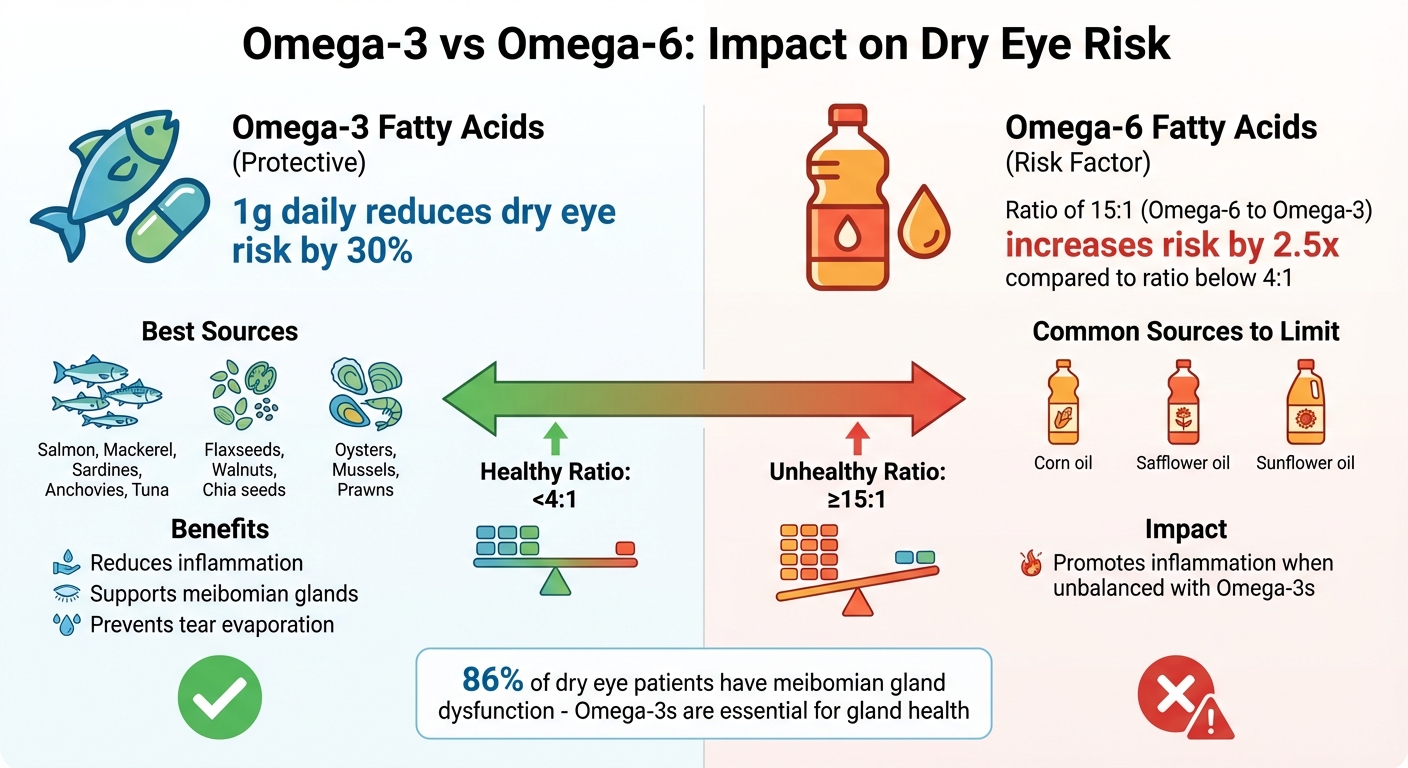
Omega-3 vs Omega-6 Fatty Acids Impact on Dry Eye Risk
What you eat plays a big role in managing dry eye symptoms. Nutrition directly affects the composition of your tears – a delicate mix of water, oil, and mucus that keeps your eyes comfortable. When certain nutrients are lacking, this balance is disrupted, often making dry eye symptoms worse.
Research strongly supports the link between diet and eye health. For instance, adding just one gram of omega-3 fatty acids daily can lower your risk of developing dry eye by 30%. On the other hand, consuming too many omega-6 fatty acids compared to omega-3s (a ratio of 15:1 or higher) can increase your risk by over 2.5 times compared to a healthier ratio of less than 4:1.
Adding Omega-3 Fatty Acids
Omega-3 fatty acids are key for reducing inflammation and supporting the meibomian glands, which produce the oily layer of your tears. This oily layer helps prevent tears from evaporating too quickly. Since up to 86% of people with dry eye experience meibomian gland dysfunction, omega-3s are particularly important.
Fatty fish like salmon, mackerel, sardines, anchovies, and tuna are excellent sources of EPA and DHA, the most effective forms of omega-3s for managing dry eye. Aim to include these fish in your diet at least twice a week. If you prefer plant-based options, walnuts, flaxseeds, chia seeds, and hemp seeds provide ALA, another type of omega-3. However, ALA converts less efficiently to EPA and DHA, so fish is a better option if you can include it.
To maximize the benefits, try to cut back on omega-6-rich oils such as corn, safflower, and sunflower oils. These oils are common in many diets and can promote inflammation when not balanced with omega-3s.
| Food Category | Specific Examples | Nutrients |
|---|---|---|
| Fatty Fish | Salmon, Mackerel, Sardines, Anchovies, Tuna | EPA & DHA (Long-chain Omega-3) |
| Seeds & Nuts | Flaxseeds, Walnuts, Chia seeds, Pumpkin seeds | ALA (Short-chain Omega-3), Vitamin E |
| Marine Shellfish | Oysters, Mussels, Prawns | EPA & DHA |
Following a Mediterranean-Style Diet
A Mediterranean-style eating plan does more than just add omega-3s to your diet. It emphasizes healthy fats from olive oil, plenty of fruits and vegetables, legumes, whole grains, and regular servings of fish. This approach helps reduce inflammation, protect against oxidative stress, and support the cells responsible for tear production.
A 2020 study involving 34 participants found that a Mediterranean diet enriched with extra virgin olive oil and nuts improved tear break-up time by 0.67 seconds and increased tear volume by 0.5 mm. Participants who combined this diet with moderate exercise, like a 45-minute daily walk, experienced even better results.
"For people who have or are at risk for macular degeneration at any stage, following the Mediterranean diet can lower your rate of disease progression by 25% or more." – Dr. Emily Chew, Director of the Division of Epidemiology and Clinical Applications, National Eye Institute
Incorporate extra virgin olive oil as your main cooking fat and for salad dressings. Its high levels of oleic acid and polyphenols provide anti-inflammatory benefits that supplements alone can’t replicate. Add at least 5 ounces of fruit to your daily meals, include nuts and seeds regularly, and eat leafy greens like spinach and kale for their vitamin A, which helps maintain the mucus layer of your tear film.
Don’t forget to stay hydrated – proper hydration is essential for tear production.
Drinking Enough Water
Water is essential for producing tears. When you’re dehydrated, tear production decreases, and the tears you do produce evaporate more quickly. This can leave your eyes feeling gritty and irritated.
Aim to drink at least 64 ounces of water each day. If you live in a dry climate or use heating systems during the winter, you might need even more. Don’t rely on thirst to remind you to drink water – thirst often signals that you’re already slightly dehydrated.
"We recommend drinking at least 64 oz of water per day to maintain optimal hydration." – Lisa Hornick, OD, FAAO and Kristyna Lensky Sipes, OD, Modern Optometry
A simple way to check your hydration level is by monitoring your urine color. If it’s colorless or light yellow, you’re likely drinking enough water. If you consume caffeine or alcohol, which can dehydrate you, increase your water intake to compensate. Eating water-rich foods like cucumbers, watermelon, celery, and oranges is another great way to stay hydrated. Green tea is also a good choice, as it provides hydration along with anti-inflammatory antioxidants called catechins.
Managing Screen Time for Dry Eye Relief
Addressing dry eye symptoms isn’t just about what you eat – it’s also about how you manage your screen time. Spending hours staring at digital screens can interfere with your natural blinking pattern. Normally, you blink every 5 to 10 seconds, which helps spread a fresh tear film across your eyes. But when you’re glued to a screen, your blink rate can drop by three to five times. Considering that the average American office worker spends around seven hours a day on a computer, this reduced blinking speeds up tear evaporation, leaving your eyes dry and irritated. To combat this, adopting intentional habits is key to protecting your eyes and maintaining their natural moisture.
Using the 20-20-20 Rule
One effective way to ease eye strain is by following the 20-20-20 rule. Here’s how it works: every 20 minutes, take a 20-second break and focus on something 20 feet away. This quick pause not only helps reset your blink rate but also reduces strain from prolonged screen use. To make this routine second nature, try setting a timer on your phone as a reminder. And while you’re at it, make a conscious effort to blink more often while working.
Adjusting Screen Settings
Tweaking your screen settings can make a big difference in reducing eye discomfort. Start by adjusting the brightness to match the lighting in your room and setting the contrast to between 60% and 70% to make on-screen text easier to read. For smoother visuals, aim for a refresh rate of at least 70Hz. Position your monitor 25 to 35 inches away, with the top of the screen at eye level and the center tilted about 10 degrees below your direct line of sight. Increasing your font size to at least 12pt can also ease the strain on your eyes.
If you wear contact lenses, consider switching to glasses during long screen sessions. Contacts can interfere with your tear film, potentially worsening dryness [18, 19]. Additionally, check that air conditioning vents, heaters, or fans aren’t blowing directly on your face, as this can further accelerate tear evaporation [18, 20].
| Setting | Recommended Adjustment | Benefit |
|---|---|---|
| Brightness | Match ambient light levels | Reduces glare and squinting |
| Contrast | 60% – 70% | Improves text clarity |
| Font Size | 12pt or higher | Eases focusing effort |
| Refresh Rate | 70Hz or higher | Minimizes screen flickering |
Taking these steps can help you reclaim some comfort during those long hours in front of a screen. Small changes to your habits and environment can go a long way in keeping your eyes healthy and irritation-free.
Improving Your Environment for Eye Comfort
Your surroundings play a big role in managing dry eye symptoms. Factors like air quality, humidity, and airflow can either support or hinder your efforts to maintain eye moisture. While diet and screen habits are essential for tear production and retention, making a few tweaks to your environment can enhance these benefits and help protect your tear film throughout the day.
Using a Humidifier
Dry indoor air, especially during winter, speeds up tear evaporation. A humidifier adds moisture back into the air, helping to stabilize your tear film and slow down evaporation. This is particularly helpful if you live in a dry climate, at high altitudes, or spend a lot of time in air-conditioned spaces. Placing a humidifier in your bedroom can keep your eyes hydrated while you sleep. Increasing humidity in your environment is a key step in managing evaporative dry eye.
Avoiding Airborne Irritants
Irritants like cigarette smoke, dust, and pollutants can aggravate your eyes and reduce tear film stability. Studies reveal that long-term smokers often experience increased meibomian gland dysfunction and less stable tear films.
"Smoking is not only associated with dry eye disease, but other ocular pathologies such as age-related macular degeneration (ARMD) and retinal nerve fiber layer (RNFL) changes."
– Courtney Dryer, OD
To safeguard your eyes, avoid smoking and steer clear of areas with secondhand smoke. On windy or dusty days, wear wraparound sunglasses to shield your eyes from irritants.
"Environmental changes; protecting your eyes at all times if you’re someone who’s very prone to dryness. You want to wear something over your eyes when you’re out and about and it’s a windy day."
– Dr. Karen Fernandez
Indoors, using air filters can help reduce dust, allergens, and other particles that may irritate your eyes.
Adjusting Airflow and Ventilation
Airflow from fans, air conditioners, and heaters can dry out your eyes if directed at your face. To minimize moisture loss, redirect these air sources. In your car, point vents toward your feet or body rather than your face. Similarly, position ceiling or portable fans so they don’t blow directly at you.
| Airflow Source | Recommended Adjustment |
|---|---|
| Car Vents | Direct airflow toward the feet or away from your face |
| Ceiling/Portable Fans | Ensure air doesn’t blow directly across your face |
| Hair Dryers | Keep the device at a distance and avoid aiming it at your eyes |
| Outdoor Wind | Use wraparound sunglasses to block wind from reaching your eyes |
Even your computer setup matters. Placing your monitor slightly below eye level encourages your eyelids to stay lower, exposing less of your eye to drying air and reducing tear evaporation. Together, these small environmental changes can work alongside dietary and screen-time strategies to provide relief from dry eyes. By creating a more eye-friendly environment, you set the stage for lasting comfort and improved eye health.
sbb-itb-246add9
Lifestyle Changes to Improve Eye Health
Your daily habits play a significant role in supporting tear production and ensuring eye comfort. Small adjustments, such as quitting smoking, improving sleep quality, and rethinking your eyewear choices, can make a noticeable difference in your eye health. These changes work hand-in-hand with dietary and environmental strategies to provide relief from dry eye symptoms.
Quitting Smoking
Smoking harms more than just your lungs – it also takes a toll on your eyes. It triggers inflammation in the corneal epithelial cells by releasing cytokines, which can worsen dry eye symptoms. Research shows that a history of smoking over 10 years is linked to reduced tear film quality and increased meibomian gland dysfunction, both of which destabilize the lipid layer of your tears.
"Smoking has long been associated with cancer and respiratory illness, but recent studies confirm an association between smoking and chronic dry eye."
– Courtney Dryer, OD
Smoking not only disrupts the tear film but also alters its composition and damages corneal structures. By quitting, you can stabilize your tear film and reduce the risk of age-related eye conditions, such as macular degeneration and retinal nerve fiber layer damage.
Improving Sleep Quality
Getting seven to eight hours of quality sleep each night is crucial for tear production and the repair of your eye’s surface. Studies reveal a direct connection between sleep dysfunction and the severity of dry eye symptoms. Insufficient rest can lead to inadequate tear production and reduced time for your eyes to heal.
If you sleep with your eyes slightly open, you may experience morning dryness, discomfort, and a gritty sensation. To combat this, applying a thick lubricating ointment or gel before bed can help retain moisture overnight. Using a sleep mask can also shield your eyes from air movement while you rest.
To create an optimal sleep environment, consider these tips:
- Use a humidifier in your bedroom.
- Maintain a room temperature around 65°F.
- Reduce screen time at least two hours before bed to limit blue light exposure.
- Avoid caffeine for at least eight hours before sleeping, as late-day caffeine can reduce total sleep time by 45 minutes and lower sleep efficiency by 7%.
Better sleep not only helps replenish your tear film but also alleviates dry eye discomfort. Adjusting your eyewear habits can further protect your eyes from everyday stressors.
Switching from Contact Lenses to Glasses
Contact lenses can exacerbate dry eye symptoms by disrupting your tear film. They split the tear film into two thin layers, leading to instability, faster evaporation, and uneven tear distribution. Over time, this can create extra friction on the eye’s surface, potentially causing corneal nerve desensitivity.
"Contact lenses may be preferable to glasses in many situations, but they are a known risk factor for increasing dry eye symptoms."
– Courtney Dryer, OD
Switching to glasses more often gives your eyes a break from the strain caused by contact lenses. Glasses also act as a protective barrier, shielding your eyes from wind, dry air, and airborne irritants. For additional protection, consider wraparound glasses or styles with side shields to reduce tear evaporation.
If you prefer to continue wearing contacts, explore options like moisture-retaining materials or scleral lenses, which create a tear-filled reservoir to keep your eyes hydrated. These adjustments can support tear film stability and help preserve overall eye health.
Building a Daily Dry Eye Care Routine
Establishing a consistent routine can help ease dry eye symptoms while promoting long-term eye health. A combination of artificial tears, warm compresses, and proper eyelid care plays a key role in maintaining a stable tear film and keeping your meibomian glands healthy. These daily habits work hand-in-hand with dietary, screen-use, and environmental adjustments discussed earlier.
Using Artificial Tears and Eye Drops
Artificial tears provide quick relief by lubricating your eyes, but they’re most effective when used proactively – before discomfort sets in. For mild symptoms, aim to apply 2–4 drops daily. If you experience chronic dry eye, increase to 4–6 applications per day for 1–2 months to achieve consistent relief.
"If you have chronic dry eyes, use eye drops even when your eyes feel fine to keep them well lubricated."
– Mayo Clinic Staff
For those needing drops more than four times a day, preservative-free options are a better choice. Additives like benzalkonium chloride in regular drops can irritate your eyes when used excessively. Preservative-free drops can be used as often as every two hours for severe dryness. At night, thicker lubricating ointments or gels can provide moisture while you sleep. Be cautious with "red-eye relief" drops, as their decongestants may worsen dryness over time.
Applying Warm Compresses and Practicing Eyelid Hygiene
A warm compress applied to closed eyelids for about 5 minutes can help unclog the meibomian glands, allowing essential oils to flow and reducing tear evaporation. Follow this with eyelid cleansing wipes containing tea tree oil or hypochlorous acid to remove bacteria, debris, and particles that contribute to inflammation.
"Addressing lid hygiene can make a significant difference. For example, Demodex is something that we can treat quickly… Managing those smaller components can make a big impact on the overall picture."
– Nishika M. Reddy, MD, Assistant Professor of Ophthalmology at the Moran Eye Center
This simple routine not only supports tear film stability but also reduces irritation caused by clogged glands or bacteria.
Taking Supplements
Adding omega-3 supplements to your daily routine can further support tear film health. A daily intake of 2,000 mg of omega-3 fatty acids, divided into smaller doses, has been shown to help alleviate dry eye symptoms.
Vitamin A is another vital nutrient for tear film health, as a deficiency in this vitamin is a known cause of dry eye syndrome. Additionally, vitamins B6, B12, C, and D contribute to overall eye health by supporting proper tear production. When combined with topical treatments, these supplements create a well-rounded approach to managing dry eye discomfort effectively.
Getting Professional Care at Cheyenne Eye Clinic and Surgery Center

Once you’ve made adjustments to your lifestyle and environment, seeking professional care becomes essential for managing persistent symptoms effectively.
While home remedies and lifestyle changes can ease discomfort, ongoing dry eye symptoms need medical attention to avoid serious issues. Without treatment, dry eye can lead to complications like abrasions, ulcers, scarring, and even permanent vision loss.
At Cheyenne Eye Clinic and Surgery Center, advanced diagnostic tools are used to identify the root cause of your dry eye. Tests such as the Schirmer’s Test, TBUT (tear breakup time), and slit-lamp exams help evaluate the condition of your tear film. These tests pinpoint whether problems lie in the oily, watery, or mucus layers of your tears, allowing for a customized treatment plan tailored to your specific needs.
"Dry eye is a long-term (chronic) condition. It doesn’t have a cure, but treatments can help manage your symptoms."
– Cleveland Clinic
The clinic provides a range of treatments, including prescription eye drops, punctal plugs, and expert advice to integrate clinical therapies with your at-home care routine. For more severe cases, board-certified ophthalmologists are equipped to perform advanced procedures, such as laser treatments or surgery.
Their approach goes beyond immediate treatment. The team emphasizes long-term care, offering guidance on practices like eyelid massage techniques and dietary recommendations, including fish oil supplements. This comprehensive support works hand in hand with the lifestyle and environmental strategies discussed earlier, ensuring you have all the tools to manage your condition effectively.
Conclusion
Managing dry eye involves a combination of consistent self-care and professional guidance. Tackling this condition means addressing its various triggers. Simple lifestyle changes – like incorporating omega-3s into your diet, staying well-hydrated, following the 20-20-20 rule to reduce screen strain, and maintaining optimal indoor humidity – can go a long way toward alleviating symptoms. While dry eye may not have a permanent cure, these adjustments can help ease discomforts such as redness, burning, and sensitivity to light.
For lasting relief, it’s important to establish a daily routine that includes practices like eyelid hygiene, warm compresses, ergonomic adjustments, and adopting a Mediterranean-style diet. These small but steady habits can help keep symptoms under control over time.
"Small lifestyle changes can make a big difference to improve your dry eye symptoms." – CorneaCare
While these routines lay a strong foundation for managing dry eye, knowing when to seek professional help is equally important. If symptoms worsen – like increased pain, changes in eye color, or persistent irritation – it’s crucial to consult an eye care specialist. A professional evaluation can uncover underlying issues, provide access to prescription treatments that go beyond over-the-counter options, and help prevent more serious complications, such as corneal damage.
At Cheyenne Eye Clinic and Surgery Center, comprehensive diagnostics and personalized treatment plans are available to address your unique needs. Their board-certified specialists can guide you through advanced therapies and long-term strategies, ensuring that with the right balance of home care and professional support, you can effectively manage dry eye and protect your vision.
FAQs
How can omega-3 fatty acids help relieve dry eye symptoms?
Omega-3 fatty acids, especially EPA and DHA found in fish oil, play a key role in easing dry eye symptoms. They work by reducing inflammation and enhancing the tear film’s stability. These fats support the function of the meibomian glands, which produce the oily layer in your tears. This oily layer is crucial because it slows tear evaporation, keeping your eyes feeling more comfortable.
Adding omega-3-rich foods like salmon, sardines, or walnuts to your meals – or taking a high-quality fish oil supplement with about 1,000 mg of combined EPA and DHA daily – can be an effective way to manage dry eye. At Cheyenne Eye Clinic and Surgery Center, our eye-care experts often suggest omega-3s as part of a broader approach. This might include using a humidifier, taking regular breaks from screens, and maintaining proper eyelid hygiene to promote lasting eye comfort.
What is the 20-20-20 rule and how can it help with screen-related eye strain?
The 20-20-20 rule offers an easy way to ease eye strain from extended screen time. Here’s how it works: every 20 minutes, shift your focus to something at least 20 feet away and hold that gaze for 20 seconds.
This simple practice gives your eye muscles a much-needed break and naturally prompts more blinking, which can help combat dryness and the discomfort that often comes with staring at screens for too long.
How does staying hydrated help with dry eye?
Staying hydrated is a key factor in managing dry eye because your body relies on adequate water intake to produce tears. The watery layer of your tear film, which helps keep your eyes moist and protected, is directly tied to how much fluid you consume. Without enough hydration, this layer becomes thinner, evaporates more quickly, and leaves your eyes feeling dry, irritated, or scratchy.
To maintain healthy tear production, aim for the recommended daily water intake: about 91 ounces for women and 125 ounces for men. These numbers may vary depending on your activity level, climate, or medications that cause fluid loss. Along with staying hydrated, consider other helpful habits like using a humidifier or taking regular breaks from screens. These small adjustments can make a big difference in keeping your eyes comfortable. For more tailored advice, the team at Cheyenne Eye Clinic and Surgery Center is available to help you effectively manage your dry eye symptoms.