
Contact lenses are a great alternative to glasses, offering convenience and freedom. But they require proper care to avoid eye infections and ensure comfort. Here’s a quick guide to help you get started:
- Supplies You’ll Need: Prescribed lenses, multipurpose cleaning solution (not saline), a clean storage case, rewetting drops, and backup glasses.
- Hygiene Is Key: Wash hands with mild, fragrance-free soap before handling lenses. Dry with lint-free towels.
- Daily Care: Clean lenses using the "rub and rinse" method with fresh solution. Never use tap water or saliva.
- Proper Handling: Inspect lenses for damage, insert them carefully, and remove them safely. Always start with the same eye to avoid mix-ups.
- Avoid Common Mistakes: Don’t sleep, swim, or shower with lenses. Replace lenses and storage cases as recommended.
- Follow-Up Visits: Regular check-ups with your eye doctor ensure your lenses fit well and your eyes stay healthy.
Before Your First Wear
Gather Your Essentials
Before you put in your first pair of contact lenses, make sure you have everything you need. Start with your prescribed contact lenses, which might be trial lenses provided during your fitting. You’ll also need a multipurpose cleaning solution to disinfect and store your lenses – don’t mix this up with saline solution, which is only for rinsing and doesn’t disinfect.
A clean storage case is a must for reusable lenses, and rewetting drops can help keep your eyes comfortable throughout the day. It’s also a good idea to have backup glasses with your current prescription handy, just in case you need to remove your lenses due to irritation or discomfort.
For hygiene, use a mild, fragrance-free, and oil-free soap to wash your hands before handling your lenses. Soaps with added oils or fragrances can stick to the lens surface and cause issues. Dry your hands and lens case with lint-free towels or tissues – regular towels can leave fibers behind that might transfer to your lenses.
| Supply Item | Purpose | Replacement Frequency |
|---|---|---|
| Contact Lens Case | Storage and disinfection | Every 3 months |
| Multipurpose Solution | Cleaning, rinsing, and storing | 1 month after opening |
| Backup Glasses | Emergency vision correction | As prescription changes |
| Rewetting Drops | Comfort and moisture | As needed or per expiry |
Once you’ve gathered your supplies, it’s time to schedule your fitting appointment for a proper evaluation.
Schedule a Fitting Appointment
A contact lens exam is different from a standard eye exam – it’s focused on ensuring the lenses fit your eyes properly. At Cheyenne Eye Clinic and Surgery Center, they emphasize that contact lens prescriptions are not the same as glasses prescriptions. During your fitting, your provider will measure your eye’s curvature, determine the right power, curve, and diameter, and choose the best lens material for your needs.
You’ll receive trial lenses to test their fit and vision clarity before finalizing your prescription. The appointment also includes personalized instructions on handling your lenses, setting a wearing schedule, and choosing the right cleaning solutions for your lens type. This guidance is crucial – proper fitting minimizes the risk of eye infections, corneal ulcers, and discomfort. In some cases, multiple visits may be needed to ensure the best fit.
sbb-itb-246add9
Contact Lens Tips for Beginners | Eye Doctor Explains
Hygiene and Safe Handling
Keeping your lenses clean starts with proper hygiene – it’s your best defense against eye infections. Bacteria from your hands can easily transfer to your lenses, so careful handling is crucial.
Wash Your Hands the Right Way
Always wash your hands thoroughly with mild, oil-free soap and water before touching your lenses. Avoid soaps with oils or fragrances, as they can leave residues that might transfer to your lenses. Once washed, dry your hands completely with a clean, lint-free towel. Handling lenses with wet hands is a no-go – tap water can carry harmful microorganisms like Acanthamoeba.
Keep Your Lens Case Clean
Your lens case needs daily care to stay bacteria-free. After inserting your lenses, clean the case using the "rub and rinse" method: rub it with fresh multipurpose solution and rinse thoroughly. Never use tap water for this step. Once cleaned, dry the case with a clean, lint-free tissue and store it upside down with the lids off to air dry completely.
Make it a habit to replace your lens case at least every three months. Some manufacturers suggest swapping it out every one to three months, and you should replace it immediately if it’s cracked, damaged, or discolored. Also, avoid "topping off" old solution – always empty the case entirely and refill it with fresh solution each time you store your lenses. With clean hands and a well-maintained case, you’re all set to handle your lenses safely.
How to Handle Your Lenses
Once you’ve ensured clean hands and a sanitized case, it’s time to focus on handling your lenses the right way. Here’s how to do it step by step.
Inspect Lenses Before Use
Before inserting your lenses, take a moment to inspect them carefully. Place the lens on the tip of your index finger and check for any tears, scratches, deposits, or discoloration. To confirm the lens is oriented correctly, use the side view method: a properly oriented lens will form a perfect "U" shape with its edges curving upward, like half a ball. If the edges flare outward like a soup bowl, the lens needs to be flipped. Some lenses also have laser-etched markings to help verify correct orientation.
"A lens should be brought back to your eye doctor for evaluation if: It accumulates deposits, is no longer comfortable, or becomes discolored… [or] becomes scratched, chipped, or cracked." – University of Iowa Health Care
If you accidentally drop the lens during inspection, rinse it thoroughly with sterile contact lens solution before attempting to use it. Avoid wearing a damaged lens – consult your eye care professional for advice. Once you’re confident the lens is intact, you can move on to inserting it.
Insert Lenses Correctly
Inserting your lenses requires a steady hand and proper technique. Always start with the same eye (many people choose the right eye) to avoid mixing up your prescriptions. Place the inspected lens on the tip of your dominant index finger. Use your non-dominant hand to gently pull your upper eyelid upward, and with the middle finger of your dominant hand, pull your lower lid downward to create a wide opening.
While looking straight ahead or slightly upward, place the lens directly onto your cornea. Slowly release your eyelids and let them close naturally. To help the lens settle, either blink softly or roll your eye in a full circle.
The lens should feel comfortable right away. If it feels scratchy or irritating, remove it, rinse it with solution, and inspect it for damage before trying again.
Remove Lenses Safely
When it’s time to take out your lenses, follow these steps to ensure safe removal. Start by washing and thoroughly drying your hands. Look upward and gently slide the lens down to the white part of your eye (the sclera) using your index finger. This moves the lens away from the sensitive cornea.
With your non-dominant hand, hold your upper eyelid while using the middle finger of your dominant hand to pull down your lower lid. Then, gently pinch the lens using the pads of your thumb and index finger – avoid using your nails to prevent scratching your eye. Keeping your nails trimmed short can help reduce this risk. Before pinching, confirm in a mirror that the lens is still on your eye.
"Pinching the surface of your eye when a contact lens isn’t present can result in an injury to the cornea." – All About Vision
If the lens feels stuck, try blinking a few times or applying rewetting drops to lubricate your eye. For reusable lenses, after removal, place the lens in your palm and gently rub it with fresh solution for about 30 seconds before storing it. Proper removal is a key part of maintaining overall lens hygiene and safety, as discussed throughout this guide.
Daily Care and Cleaning
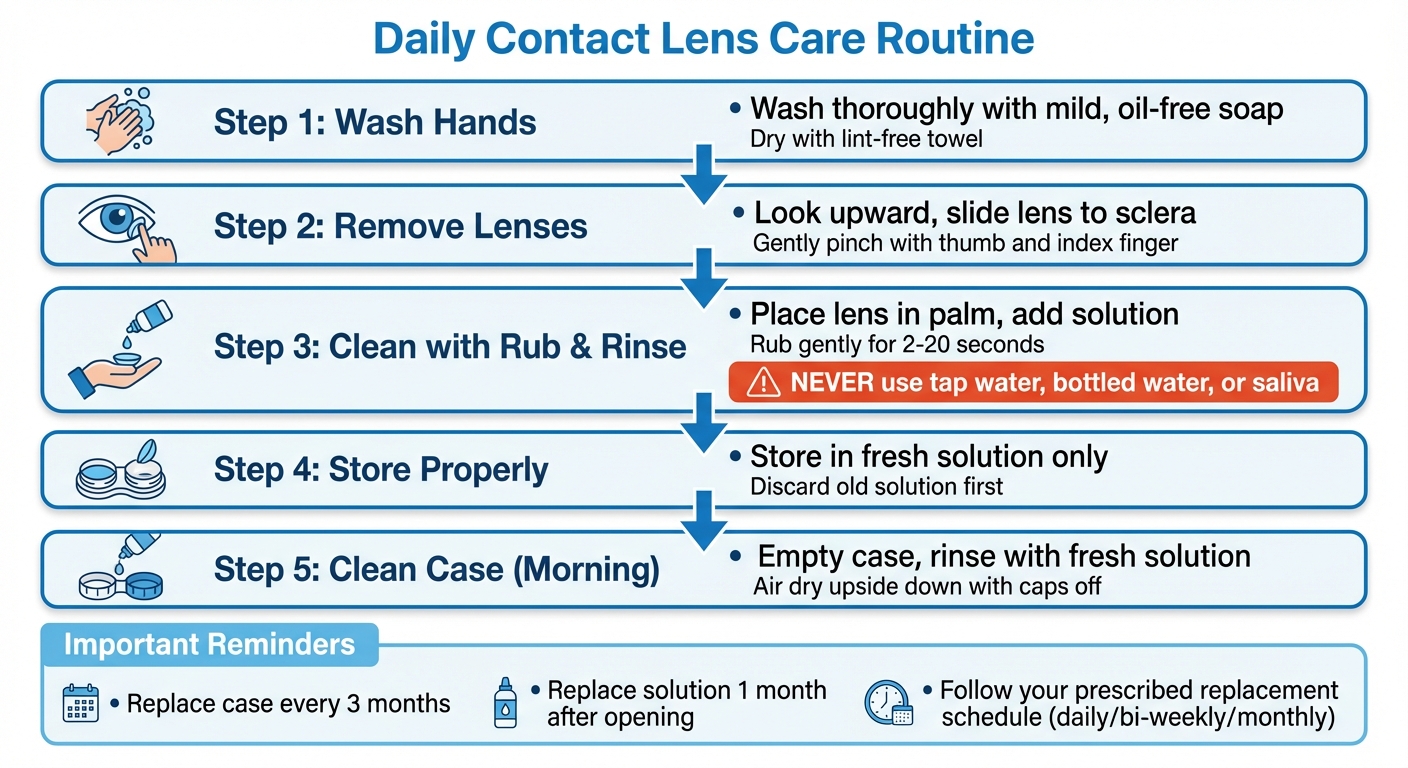
Daily Contact Lens Care Routine: Step-by-Step Guide
A simple daily routine can go a long way in preventing infections and ensuring your comfort. When done regularly, these steps complement the handling techniques mentioned earlier.
Clean Lenses with Fresh Solution
After removing your lenses, clean them immediately. Place the lens in your palm, add a few drops of multipurpose solution, and gently rub it for 2–20 seconds, depending on your solution’s instructions. This "rub and rinse" method is essential for removing film, protein deposits, and microbes that rinsing alone can’t tackle.
"Evidence shows rubbing and rinsing to provide the safest lens wear for all contact lenses and care systems currently on the market." – Acuvue
Never use tap water, bottled water, or saliva to clean your lenses. Water can contain Acanthamoeba, a microorganism that can lead to painful infections and even vision loss. Stick to the multipurpose or disinfecting solution recommended by your eye doctor. Avoid generic brands, as they might not work well with modern lens materials. Always replace the old solution with fresh solution – reusing solution reduces its disinfecting power and increases the risk of infection.
"You reduce the risk of getting an infection in your eyes when you use fresh solution." – Michael Mendsen, OD, Optometrist, UNC Health
Store Lenses Properly Overnight
Once cleaned, store your lenses in a clean case filled with fresh solution only. Make sure to discard any leftover solution before adding new solution – never mix old and new. Most multipurpose solutions allow storage for up to 30 days in a sealed case, but hydrogen peroxide systems may require re-disinfection after 24 hours.
In the morning, empty the case, rinse it with fresh solution, and let it air dry upside down on a clean tissue with the caps off. Replace your contact lens case every three months to avoid bacterial buildup and biofilm formation.
Follow the Replacement Schedule
Stick to the replacement schedule prescribed by your eye doctor, whether it’s daily, bi-weekly, or monthly. These schedules represent the maximum wear limits – not guidelines. Wearing lenses beyond their intended lifespan allows bacteria and protein deposits to accumulate, increasing the risk of infections and other complications.
Improper care is one of the leading causes of preventable eye infections. If you’re unsure about your replacement schedule, reach out to Cheyenne Eye Clinic and Surgery Center for guidance. Following these daily care steps helps you steer clear of common issues and maintain healthy, comfortable vision.
Common Mistakes to Avoid
Even with the best intentions, first-time contact lens wearers often stumble into habits that can harm their eye health. Knowing what to steer clear of can help you maintain clear vision and enjoy a comfortable lens-wearing experience.
Do Not Sleep in Lenses
Falling asleep with your contact lenses in – even for a quick nap – can significantly increase your risk of eye infections. In fact, about 3 out of 10 contact lens users admit to sleeping or napping in their lenses, which can raise the risk of serious infections by 6 to 8 times. Specifically, microbial keratitis cases jump to 18–20 per 10,000 wearers annually when lenses are worn overnight.
Why is this risky? Contact lenses limit oxygen flow to your eyes, causing the cornea to swell. This creates an ideal environment for bacteria, fungi, and other microorganisms, potentially leading to infections like acanthamoeba keratitis. Additionally, lenses can dry out and stick to your eyes overnight, increasing the chance of corneal abrasions during removal [24, 25].
"It’s important to give the eyes a break and let the cornea breathe. When your eyes and contacts dry out too much, you can cause damage when you finally do remove them."
- Allison Babiuch, MD, Ophthalmologist, Cleveland Clinic
If you accidentally fall asleep with your lenses in, don’t remove them right away. Instead, use rewetting drops or saline, blink a few times to lubricate the lenses, and gently massage your eyelids before attempting removal. Allow your eyes to rest for at least 24 hours afterward to recover. To help you remember to take out your lenses, try setting a phone alarm or keeping your lens case near your toothbrush as a visual cue [24, 25, 26].
Only wear lenses overnight if they’re specifically FDA-approved for extended wear and prescribed by your eye doctor. Even with approved lenses, the risk of infection is higher compared to removing them nightly.
Keep Lenses Away from Water
Avoiding water exposure is just as important as practicing good hygiene with your contact lenses. Water – whether it’s from the tap, a bottle, or natural sources like lakes or oceans – can carry harmful pathogens that lead to severe eye infections. Because soft contact lenses are porous, they can absorb these microorganisms, creating a breeding ground for bacteria.
"When you’re wearing contact lenses, you’re getting less oxygen to the eye than normal… a soft lens contact is porous and can be the perfect breeding ground for bacteria."
- Reecha Kampani, OD, Optometrist, Cleveland Clinic
Follow the "Three Ss" rule: no sleeping, swimming, or showering with lenses. Since 2006, the U.S. has faced multiple outbreaks of acanthamoeba and fungal keratitis tied to water exposure and poor hygiene practices. These infections can sometimes lead to irreversible vision loss.
Always have a pair of backup glasses on hand in case you need to remove your lenses unexpectedly. If your lenses come into contact with water, take them out immediately. If you notice irritation, redness, or blurred vision afterward, contact your eye care provider without delay [6, 28].
Remove Lenses if You Feel Discomfort
Paying attention to discomfort is a key part of safe lens handling. If you experience redness, irritation, or blurry vision, remove your lenses right away and consult your eye care provider.
If a lens feels stuck, don’t force it. Wait about 10 minutes or use rewetting drops to lubricate your eyes before trying again. After removing the lens, check it for any tears, debris, or dust. Allow your eyes to rest for several hours before putting lenses back in.
Be alert for symptoms that require urgent medical attention, such as severe eye pain, extreme sensitivity to light, sudden vision changes, or unusual discharge. These could signal a serious infection or a corneal ulcer. In such cases, contact Cheyenne Eye Clinic and Surgery Center immediately. Quick action can prevent complications and safeguard your vision.
Follow-Up Care and Monitoring
Taking care of your eyes doesn’t stop at wearing contact lenses – it’s an ongoing process. Regular follow-up appointments are essential to ensure your lenses are performing well and your eyes stay healthy. Many places require a contact lens check-up within the last year to allow continued lens purchases, and eye care professionals often recommend an annual recheck to keep things on track and comfortable for you. Here’s what to expect during follow-ups and some tips for wearing your lenses safely.
Attend Follow-Up Appointments
Before heading to your follow-up appointment at Cheyenne Eye Clinic and Surgery Center, make sure to wear your contact lenses for at least four hours. This helps your provider evaluate how well the lenses fit and perform. During the visit, they’ll check the fit, test your vision to confirm your prescription is accurate, and examine your eyes for any signs of stress, inflammation, or damage.
Don’t forget to bring along your lens case, solution, and a backup pair of glasses. It’s also a good idea to share any issues you’ve noticed since your initial fitting – like redness, itching, sensitivity to light, or blurry vision. Your provider will also review how you’re cleaning, disinfecting, and storing your lenses to help you avoid problems like bacterial infections.
Increase Wear Time Gradually
When you’re new to contact lenses, easing into wearing them is key. Stick to a maximum of 12 hours a day until your follow-up appointment. Start small – around 4–6 hours a day – and increase the time gradually, following your provider’s advice. This gives your eyes time to adapt to the lenses safely.
"When you’re wearing contact lenses, you’re getting less oxygen to the eye than normal. So, if you’re then overwearing that contact you’re putting the eye under more stress than it would be otherwise."
- Reecha Kampani, OD, Cleveland Clinic
Report Any Problems Right Away
If you notice pain, redness, sensitivity to light, blurred vision, watery eyes, or unusual discharge, take your lenses out immediately. If the symptoms don’t improve, reach out to your eye care provider. Eye doctors often refer to "The Big Three" warning signs – redness, blurriness, and light sensitivity – that signal you need immediate attention. Acting quickly can help prevent serious issues like corneal ulcers or microbial keratitis from developing.
Conclusion
Starting your contact lens journey can be smooth if you stick to a few straightforward habits. Always prioritize hygiene when handling your lenses, follow your prescribed replacement schedule, and keep a pair of backup glasses within reach. Don’t forget to replace your lens case every one to three months to avoid bacterial buildup.
Be alert to any warning signs. If you notice redness, pain, blurred vision, or light sensitivity, take your lenses out right away and contact your eye doctor. Acting quickly can help protect your vision from potential complications.
Regular check-ups at Cheyenne Eye Clinic and Surgery Center are key to ensuring your lenses fit well and your eyes stay healthy. These visits also help reinforce good habits, making it easier to enjoy clear and comfortable vision while following your provider’s advice.
FAQs
How can I tell if my contact lens is flipped inside out?
To figure out if your contact lens is the right way around, place it on the tip of your finger and examine its shape. If it looks like a smooth, rounded bowl with straight edges, you’re good to go. But if the edges flare outward, resembling a saucer, the lens is flipped inside out.
You can also try gently pinching the lens. If it folds inward easily, it’s likely positioned correctly. Keep in mind, wearing a lens inside out can feel uncomfortable. If it doesn’t sit properly on your eye, take it out, check again, and try reinserting it.
What should I do if I accidentally sleep with my contact lenses in?
If you accidentally fall asleep with your contact lenses in, take them out as soon as you wake up. Your eyes might feel dry, so give it a few minutes before attempting removal. Using rewetting drops can help make the process smoother. Once the lenses are out, make sure to clean and disinfect them thoroughly before putting them back in – unless they’re daily disposables, in which case you should discard them.
Pay attention to any signs like redness, irritation, pain, or blurry vision. If these symptoms persist or you suspect an eye infection, reach out to your eye care provider immediately. Regularly sleeping in contact lenses can lead to serious eye issues, so always stick to the advice your eye care professional provides to keep your vision and eye health in check.
How often should I replace my contact lens case to keep it safe and hygienic?
To keep your eyes healthy and avoid infections, it’s a good idea to replace your contact lens case every three months. This simple habit helps minimize the risk of bacteria and other harmful microorganisms building up over time.
If you spot any cracks, discoloration, or signs of wear on your case, don’t wait – swap it out right away. Damaged cases can compromise the cleanliness of your lenses. Also, remember to clean your case properly and let it air-dry after each use. These steps can make a big difference in keeping your lenses safe and your eyes comfortable.