
Eye exams don’t prevent cataracts, but they help guide care before vision problems disrupt daily life. My main advice: If you’re 60 or older, schedule a dilated eye exam every 1 to 2 years, or sooner if your clinician advises.
Here’s what to keep in mind:
- Find the cause: An exam checks whether cataracts, a prescription change, or another eye condition explains blurry vision or glare.
- Choose the next step: Glasses and better lighting may help at first. Surgery becomes an option when cataracts interfere with reading, driving, or other tasks.
- Protect your sight: Wear UV-blocking sunglasses, avoid smoking, and keep follow-up visits.
In Cheyenne, you can schedule an exam with Cheyenne Eye Clinic and Surgery Center. An exam means getting answers – not automatically scheduling surgery. <u>Sudden vision loss or severe eye pain needs emergency care.</u>
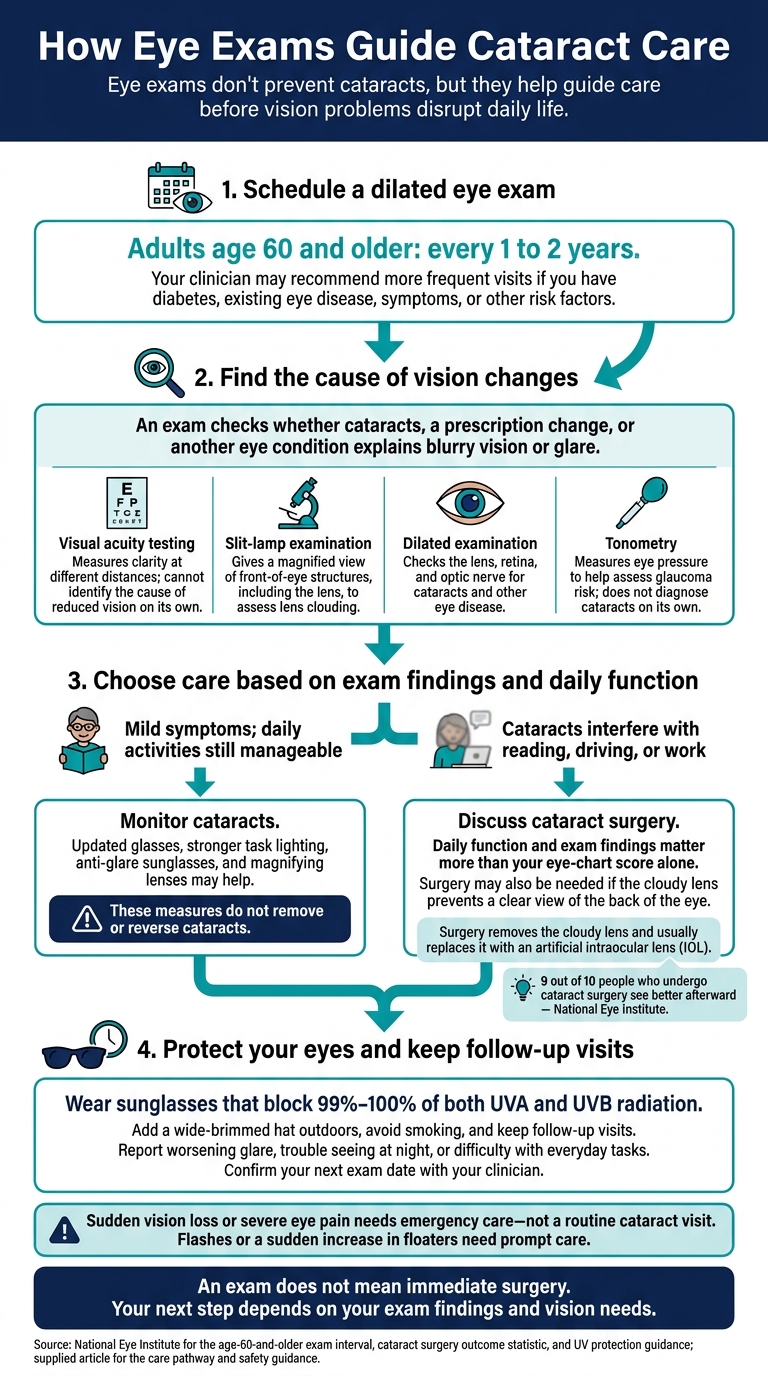
How Eye Exams Guide Cataract Care
What an Eye Exam Checks
A complete eye exam checks your lens, retina, and optic nerve – not just how well you read an eye chart. The results provide a baseline for tracking lens clouding and other eye changes over time.
Tests for Cataracts and Other Eye Conditions
Your clinician uses the results together to determine whether lens clouding explains your reduced vision or another condition may be causing it.
| Exam component | What it checks | Why it matters |
|---|---|---|
| Visual acuity testing | Clarity of vision at different distances | Measures reduced vision but cannot identify the cause on its own. |
| Slit-lamp examination | Front-of-eye structures, including the lens | Gives a magnified view to identify and assess lens clouding. |
| Dilated examination | Lens, retina, and optic nerve | Helps assess cataracts and detect retinal or optic-nerve disease. |
| Tonometry | Eye pressure | Helps assess glaucoma risk but does not diagnose cataracts on its own. |
Dilation widens your pupils so your clinician can see inside your eyes. Your close-up vision may be blurry, and light sensitivity can last for several hours. Bring sunglasses and arrange a ride home.
The exam findings also help your clinician decide when you need your next visit.
How Often Adults 60 and Older Need Eye Exams
The National Eye Institute recommends a dilated eye exam every 1 to 2 years for adults age 60 and older. If you have diabetes, existing eye disease, symptoms, or other risk factors, your clinician may recommend more frequent visits. Before you leave, confirm when your next exam is due.
Routine exams track gradual changes. Sudden vision loss, severe eye pain, flashes, or a sudden increase in floaters need prompt care. Exam results help your clinician decide whether to monitor a cataract, manage vision changes with glasses, or refer you for surgery.
sbb-itb-246add9
How Exam Results Guide Cataract Care
Exam results help your clinician decide whether to monitor cataracts or recommend surgery. They guide care before vision declines further.
Temporary Help for Mild Cataracts
If symptoms are mild and you can still handle daily activities, your clinician may recommend monitoring. Updated glasses, stronger task lighting, anti-glare sunglasses, and magnifying lenses can help you see better. These measures do not remove or reverse cataracts.
Pay attention to whether these changes still help with reading, watching TV, and other routine tasks. Return for reassessment before daily activities become unsafe, and report worsening glare, trouble seeing at night, or frequent prescription changes. When these steps no longer help enough with daily tasks, it’s time to discuss surgery.
When to Consider Cataract Surgery
Discuss surgery when cataracts interfere with reading, driving, or work. Daily function and exam findings matter more than your eye-chart score alone. Glare and reduced contrast can cause problems that a standard eye chart doesn’t measure. Surgery may also be needed if the cloudy lens keeps your clinician from getting a clear view of the back of your eye.
Cataract surgery removes the cloudy lens and usually replaces it with an artificial intraocular lens (IOL). The National Eye Institute reports that 9 out of 10 people who undergo cataract surgery see better afterward.
At your consultation, ask which IOL fits your vision goals and whether you’ll still need glasses. Discuss how glaucoma, macular degeneration, or diabetic eye disease may affect your results. Before choosing a surgery date, review what recovery involves and the surgical risks. Whether you choose surgery or monitoring, keep protecting your eyes and attending follow-up visits.
Eye Protection and Follow-Up Care
Protect Your Eyes and Report Vision Changes
Between exams, protect your eyes and track symptoms to help spot cataract changes early. The National Eye Institute recommends sunglasses that block 99%–100% of both UVA and UVB radiation and a wide-brimmed hat outdoors – even on cloudy days. Avoid smoking. For free help quitting, call 1-800-QUIT-NOW (1-800-784-8669). These habits support eye health, but they don’t replace regular eye exams.
Contact your eye-care team promptly if contrast fades, reading gets harder, or vision problems make stairs, cooking, or managing medications more difficult. Note when the changes started and which tasks they affect. Sudden vision loss or severe eye pain needs emergency care – not a routine cataract visit.
Cataract Exams and Follow-Up in Cheyenne
Once a cataract is found, follow-up exams show whether it’s stable or getting worse. These visits track lens clouding, vision changes, and other eye diseases, including glaucoma, diabetic retinopathy, and age-related macular degeneration.
Ask when to return based on your exam results and other eye conditions. Contact the clinic sooner if symptoms worsen. Bring your current glasses, medication list, and notes about changes in daily activities.
For continued monitoring or vision changes that affect your routine, schedule a complete eye exam with Cheyenne Eye Clinic and Surgery Center in Cheyenne. The clinic provides cataract monitoring, lens options, and surgical planning. An exam does not mean immediate surgery; your next step depends on the exam findings and your vision needs.
Conclusion: Regular Exams Help Protect Vision
Eye exams don’t prevent cataracts, but they can detect them early, track changes, and guide treatment before vision loss worsens. That’s why regular follow-up matters for older adults. A dilated exam also helps determine whether cataracts or another eye condition is causing vision loss.
Adults 60 and older should have a dilated eye exam every 1 to 2 years, or more often if advised. Follow-up visits track whether vision is stable or getting worse, helping determine whether to continue monitoring, use vision aids, or consider surgery.
If follow-up shows worsening vision, treatment decisions become clearer. In Cheyenne, Cheyenne Eye Clinic and Surgery Center provides thorough eye exams and cataract care.
FAQs
Can I have cataracts without noticing symptoms?
Yes. Cataracts can develop slowly, with few or no noticeable symptoms at first. Routine comprehensive eye exams, including slit-lamp and visual acuity testing, can detect cataracts before they interfere with daily life or cause more severe vision loss. Schedule regular eye exams even if your vision seems fine.
What happens if I delay cataract surgery?
Putting off cataract surgery can worsen your vision, make the procedure more complex, and increase the risk of complications. Untreated cataracts can cause inflammation, glaucoma, and total vision loss.
Even moderate vision impairment from cataracts increases the risk of falls, injuries, and fractures. It may also double the risk of depression.
An early consultation with Cheyenne Eye Clinic and Surgery Center can help protect your sight and support a simpler, more effective surgery.
Does Medicare cover cataract exams and surgery?
Coverage for cataract exams and surgery depends on your plan, including Medicare. Before your appointment, contact your insurance provider to confirm your benefits, deductibles, copays, and policy requirements.
Cheyenne Eye Clinic and Surgery Center recommends bringing both your vision and medical insurance cards, since each plan may cover different services. You can also contact the clinic to discuss your benefits and request an estimate of your out-of-pocket costs.