
If you’re struggling with itchy, watery, or red eyes due to allergies, finding the right eye drops can make a huge difference. Here’s a quick guide to the top allergy eye drops from 2025:
- Pataday: Offers up to 24-hour relief with once-daily use. Works as both an antihistamine and mast cell stabilizer. Price: $10–$30.
- Lastacaft: Prescription-strength, over-the-counter drops providing 24-hour relief with a single drop. Works fast (within 3 minutes). Price: $10–$30.
- Alaway: Twice-daily antihistamine and mast cell stabilizer. Relief lasts up to 12 hours. Price: $12–$20.
- Zaditor: Similar to Alaway, provides 12-hour relief with twice-daily use. Price: $5–$25.
- Naphcon-A: Combines antihistamine and decongestant for quick relief of redness and itching. Limit use to 3–4 days to avoid rebound redness. Price: $11–$14.
- Lumify: Targets redness without causing rebound effects. Relief lasts up to 8 hours. Price: ~$12.
Key takeaway: For all-day relief, Pataday or Lastacaft are great options. For budget-friendly choices, Alaway or Zaditor work well but require twice-daily use. If redness is your main concern, Lumify is ideal. Always follow usage instructions, especially if you wear contact lenses.
Here’s a quick comparison:
| Eye Drop | Type | Relief Duration | Price Range | Notes |
|---|---|---|---|---|
| Pataday | Antihistamine + Mast Cell Stabilizer | Up to 24 hours | $10–$30 | Best for long-lasting relief with once-daily use. |
| Lastacaft | Antihistamine | 24 hours | $10–$30 | Fast-acting, prescription strength, OTC. |
| Alaway | Antihistamine + Mast Cell Stabilizer | Up to 12 hours | $12–$20 | Twice-daily use, affordable. |
| Zaditor | Antihistamine + Mast Cell Stabilizer | Up to 12 hours | $5–$25 | Similar to Alaway, budget-friendly. |
| Naphcon-A | Antihistamine + Decongestant | A few hours | $11–$14 | Quick relief, avoid prolonged use due to rebound redness. |
| Lumify | Redness Reliever | Up to 8 hours | ~$12 | Reduces redness without rebound effects, doesn’t treat itching. |
Choose based on your symptoms, daily routine, and budget. For persistent issues, consult a doctor.
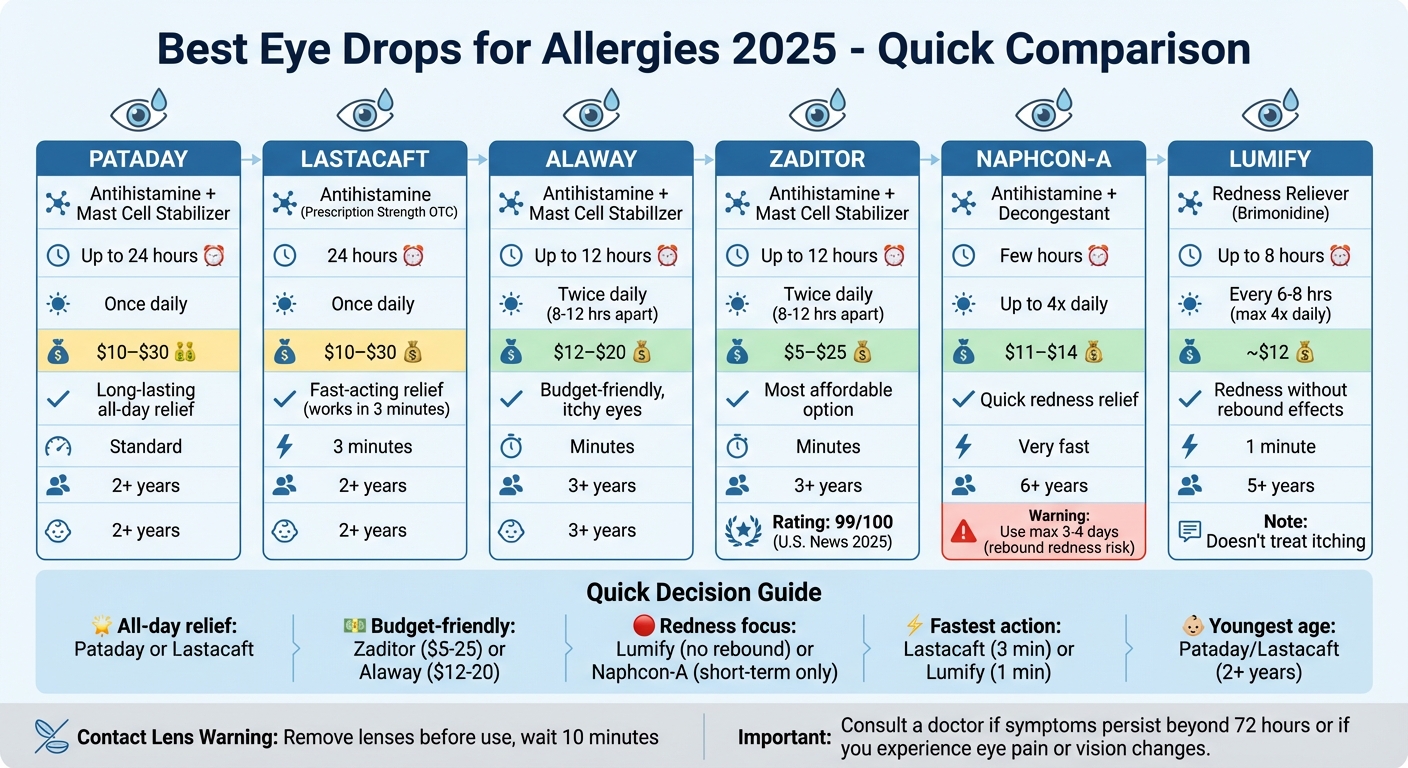
Best Allergy Eye Drops 2025: Quick Comparison Guide
Best Allergy Eye Drops For Red Itchy Eyes! (2025)
1. Pataday
Pataday ranks as the top allergy eye drop for 2025, thanks to its active ingredient, olopatadine, which works as both an antihistamine and a mast cell stabilizer. It comes in three distinct formulations to suit different needs:
- Twice Daily Relief (0.1%): Provides relief for 8 hours and is used every 6–8 hours.
- Once Daily Relief (0.2%): Offers 16-hour relief with just one application.
- Extra Strength (0.7%): Delivers 24-hour relief with a single daily drop.
These drops are particularly effective at soothing itching caused by allergens like pollen, ragweed, grass, and pet dander. According to Dr. Brynna Connor:
"These eye drops are ideal for mild to moderate symptoms, as they provide quick relief, especially to calm the itching or irritation".
Since 2008, more than 40 million prescriptions have been written for olopatadine, which was once the most prescribed ingredient for eye allergy itch relief before becoming available over the counter.
Pataday is priced between $10 and $30 and is eligible for FSA spending. It’s suitable for adults and children aged 2 and older. For best results, remove contact lenses before use, wait at least 10 minutes before reinserting them, and avoid letting the dropper tip touch any surfaces.
Next, we’ll look at another leading choice, Lastacaft, to help you make a well-informed decision.
2. Lastacaft
Lastacaft is an over-the-counter option with prescription-level strength, featuring 0.25% Alcaftadine as its active ingredient . This antihistamine works through a patented dual-action mechanism: it blocks H1 histamine receptors while also preventing histamine release from mast cells in the eyes . The Cleveland Clinic explains:
Alcaftadine (al KAF ta deen) treats allergy symptoms, such as red, itchy eyes. It works by blocking histamine, a substance released by the body during an allergic reaction
.
Just one drop a day provides relief for a full 24 hours, with noticeable effects kicking in as quickly as 3 minutes . It’s designed to combat itchy eyes caused by both seasonal and year-round allergens, such as pollen, grass, ragweed, animal hair, and pet dander. Approved for use in adults and children as young as 2 years old, it’s a versatile choice for families .
You can purchase Lastacaft in a single 5 mL bottle (a 60-day supply) or as a twin pack (a 120-day supply), with prices ranging from $10 to $30 . One satisfied user, John, shared his thoughts:
I like that it’s prescription strength but over-the-counter. I like that it’s FDA approved and gentle enough for a child
.
If you wear contact lenses, follow the standard precautions and wait at least 5 minutes between using Lastacaft and any other eye products. Store the bottle at room temperature (68°F to 77°F) and keep it tightly closed to maintain its effectiveness.
Next, let’s take a closer look at Alaway, another well-known option for allergy relief.
3. Alaway
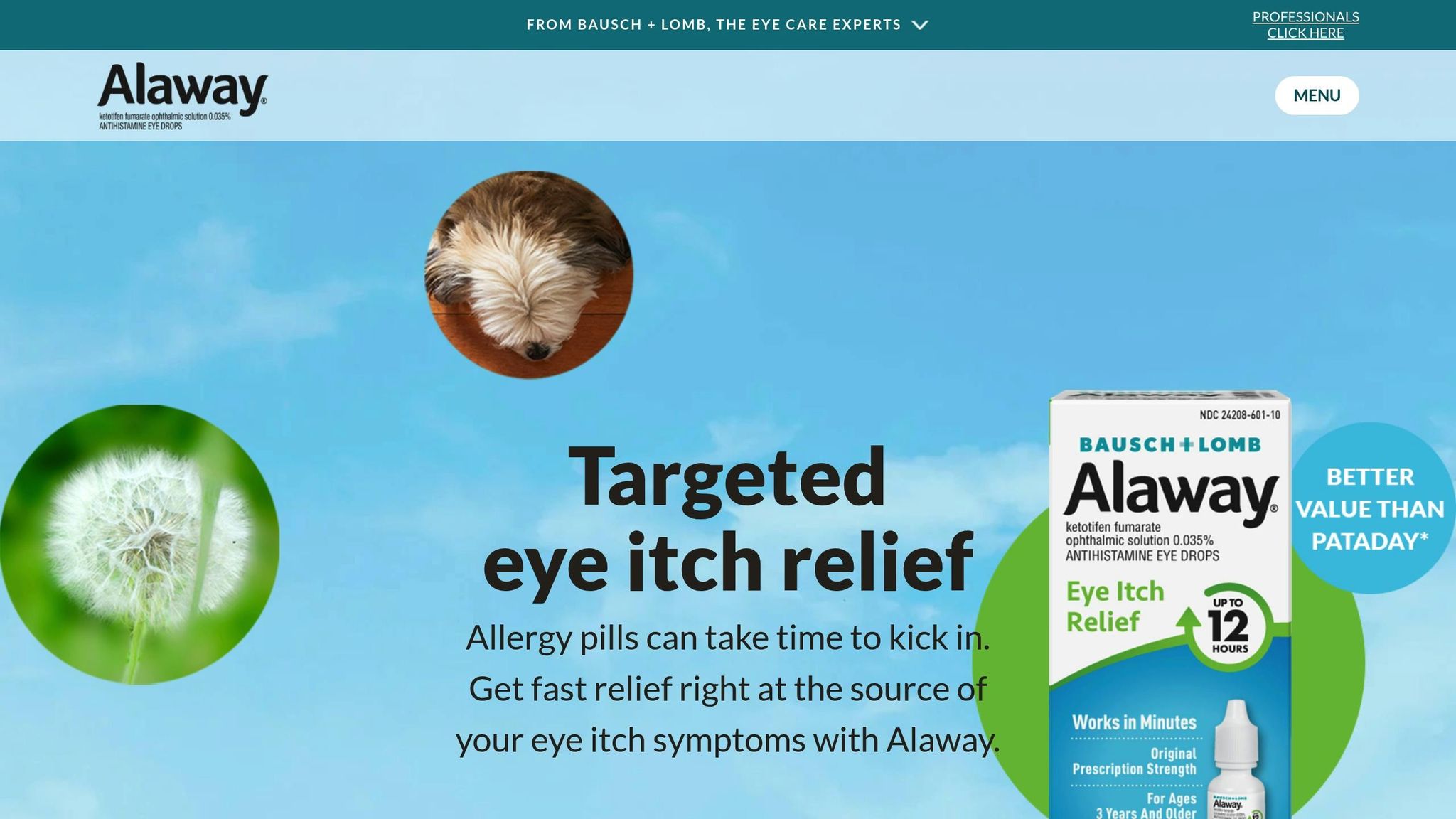
Alaway (ketotifen fumarate 0.025%) works by blocking H1 receptors, stabilizing mast cells, and reducing eosinophils, which helps relieve itching and watery eyes caused by common allergens.
The usual dosage is one drop in each affected eye, applied twice daily, with doses spaced about 8 to 12 hours apart. Relief kicks in within minutes and lasts for up to 12 hours. Alaway is approved for use in adults and children aged 3 and older. For those who wear contact lenses, it’s important to remove them before applying the drops and wait at least 10 minutes before putting them back in. Store the drops at room temperature, though some users prefer refrigerating them for an added cooling effect.
A 10 mL bottle typically costs between $12 and $20, and twin packs are available for those dealing with intense seasonal allergies. In 2024, Health.com recognized Alaway as the "Best for Itchy Eyes", highlighting its quick relief and the fact that it causes minimal dryness, even with frequent use.
If your symptoms persist beyond 72 hours or if you notice eye pain or vision changes, it’s essential to consult a doctor. Stay tuned for more insights into effective allergy relief options!
4. Zaditor
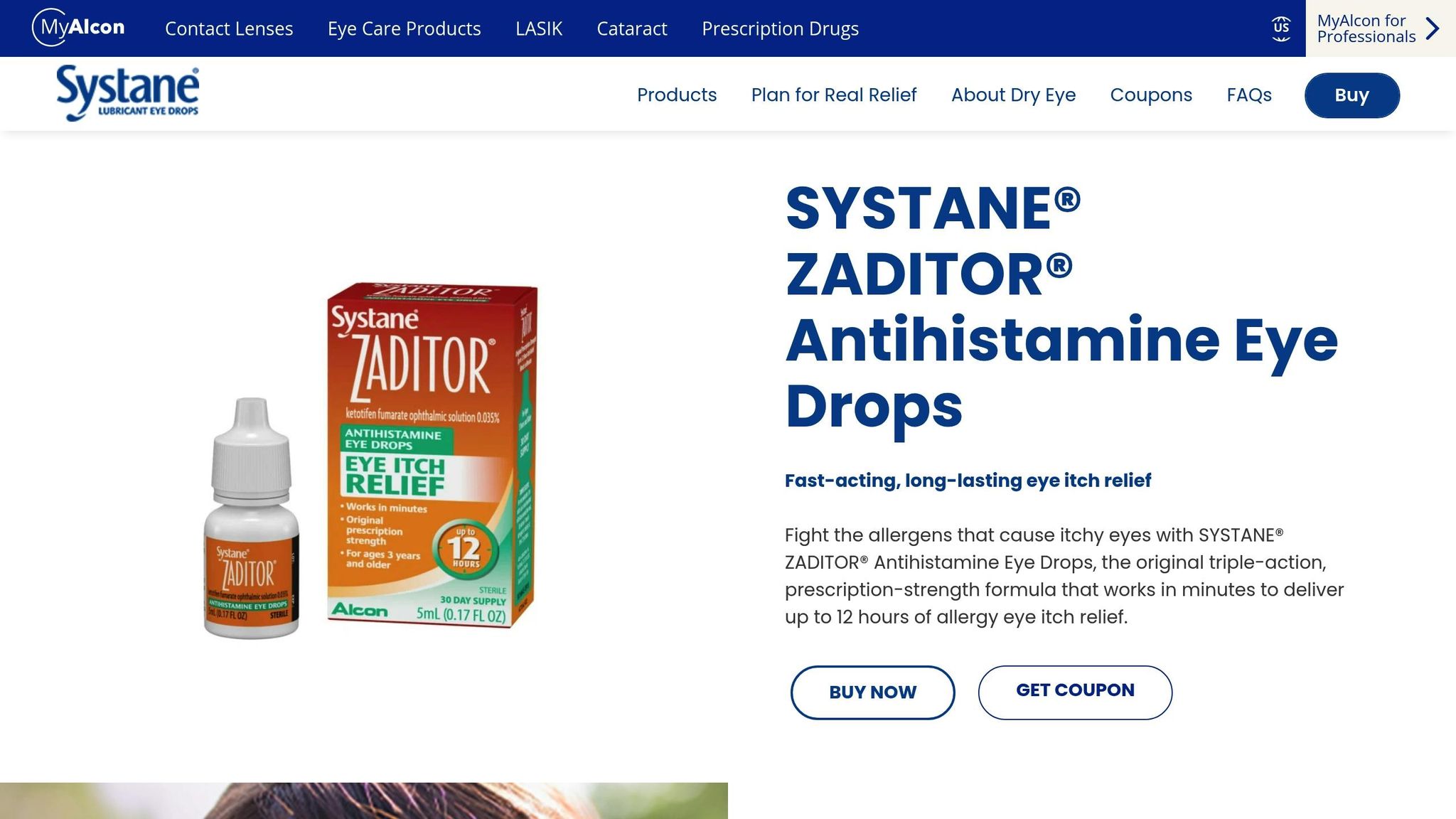
Zaditor is an eye drop solution containing ketotifen 0.025% (ketotifen fumarate 0.035%). This ingredient works both as an antihistamine for quick relief and as a mast cell stabilizer to help prevent the release of substances that trigger allergic reactions. It’s particularly effective against allergens like pollen, ragweed, grass, pet hair, and dander.
The recommended usage is one drop in each affected eye twice a day, with doses spaced 8 to 12 hours apart. Relief usually kicks in within minutes and lasts for up to 12 hours per application. Zaditor is safe for both adults and children aged 3 and older. Unlike decongestant drops, it doesn’t cause rebound redness, a common side effect.
In 2025, Zaditor earned the #2 spot on U.S. News’ list of Best Allergy Eye Drops, scoring an impressive 99 out of 100. It’s also budget-friendly, with a bottle typically costing between $5 and $25, making it a reliable and affordable option for allergy relief.
If you wear contact lenses, make sure to remove them before using the drops. Wait at least 10 minutes before putting your lenses back in. Store the bottle at room temperature, ideally between 39°F and 77°F (4°C–25°C), and keep it tightly sealed.
Some users might experience mild stinging, burning, or temporary blurred vision immediately after applying the drops. To keep the solution sterile, avoid touching the dropper tip to any surface. If you experience ongoing eye redness not related to allergies or if your symptoms persist, it’s best to consult your doctor before continuing use.
Up next, we’ll take a closer look at another strong option for allergy relief.
sbb-itb-246add9
5. Naphcon-A
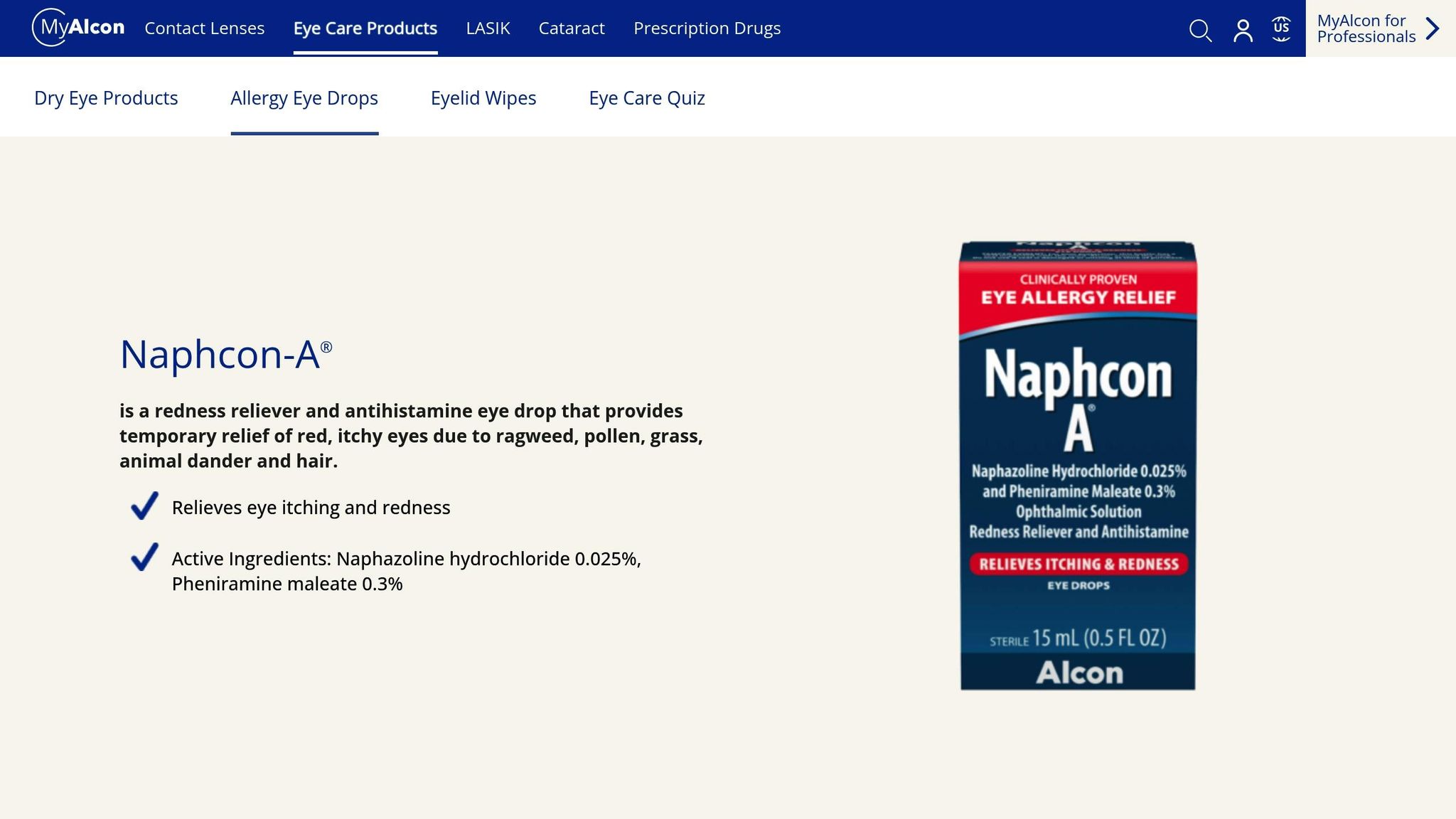
Naphcon-A combines two active ingredients – Naphazoline hydrochloride (0.025%) and Pheniramine maleate (0.3%) – to deliver targeted allergy relief. The antihistamine component tackles itching and inflammation by blocking histamine, while the decongestant works to reduce redness, swelling, and puffiness by narrowing blood vessels in the eyes. It’s designed to address symptoms caused by common allergens like ragweed, pollen, grass, and pet dander.
To use, apply one to two drops in each eye, up to four times daily. Relief kicks in quickly and lasts for a few hours. However, avoid using Naphcon-A for more than three to four consecutive days to prevent rebound redness – a condition where your eyes may appear more bloodshot after the effects wear off. If symptoms persist beyond 72 hours, it’s best to consult a doctor.
"These drops are a game changer for persistent itching, redness, and irritation associated with allergies and screen fatigue." – Lauren Paige Richeson, Editor, Health
Naphcon-A is approved for individuals aged six and older. It earned the #3 spot on U.S. News’ 2025 Best Allergy Eye Drops list, scoring 40 out of 100. Prices generally range from $5 to $25, with a 0.5 fl oz bottle typically costing between $11 and $14. Alcon also provides a 60-day satisfaction guarantee for purchases made through authorized U.S. sellers, as of September 15, 2025.
For contact lens users, remember to remove your lenses before applying the drops and wait at least 10 to 15 minutes before reinserting them. Store the bottle at room temperature (68°F to 77°F or 20°C–25°C) and keep it away from light. Some users might notice temporary side effects like enlarged pupils or increased sensitivity to light. If you have glaucoma, heart disease, or high blood pressure, consult a healthcare provider before using this product.
6. Lumify

Lumify is specifically designed to tackle eye redness, setting it apart from other drops that mainly address itching or watering. It’s the only over-the-counter (OTC) eye drop that uses brimonidine tartrate (0.025%). Unlike older redness relievers, which constrict arteries and can lead to rebound redness or dependency, Lumify works differently. It selectively targets ocular veins, offering a more precise solution for redness relief.
These drops start working in just one minute and provide relief for up to eight hours. The recommended usage is one drop in each affected eye every six to eight hours, with a maximum of four applications per day. Lumify is FDA-approved for use in adults and children aged five and older.
Dr. John Sheppard, an ophthalmologist and professor at Eastern Virginia Medical School, supports the product, saying:
"These types of drops induce dependency, so I prefer Lumify." – Dr. John Sheppard
While Lumify is effective at reducing redness caused by environmental allergens, it doesn’t address itching or other allergy-related symptoms. For those wearing contact lenses, make sure to remove them before applying the drops and wait at least 10 minutes before reinserting.
Retailing for about $12.00, Lumify was named the "Best over-the-counter eye drops for red eyes" by CNET in 2025. However, if redness lasts more than 72 hours or you experience symptoms like eye pain or vision changes, discontinue use and consult a healthcare provider.
Up next, we’ll weigh the overall pros and cons of these options.
Pros and Cons
Building on the product reviews, here’s a straightforward breakdown of the trade-offs to help you decide based on your symptoms, daily routine, and budget.
Once-daily drops (Pataday, Lastacaft) offer long-lasting relief with just a single application. Pataday typically provides relief for 16 to 24 hours, while Lastacaft delivers up to 16 hours of symptom control. This one-dose convenience is perfect for those who find it challenging to remember multiple applications throughout the day. However, these options tend to come with a higher price tag. As Dr. Brad Boyle, an optometrist, notes:
Patients have a hard time remembering to put drops in throughout the day, so it’s generally best if they can only use one drop that lasts all day
. If cost is a concern, you might want to explore twice-daily alternatives.
Twice-daily drops like Alaway and Zaditor strike a balance between effectiveness and affordability. Both use ketotifen fumarate to provide up to 12 hours of itch relief, with prices ranging from $12 to $26. Alaway is especially popular among users. The downside? These require two applications a day, and some users report a slight stinging sensation upon use.
Decongestant drops such as Naphcon-A are known for quickly easing redness and itching and are priced between $11 and $14. However, they come with a caution: using them for more than 72 hours can lead to rebound redness. Dr. Ami Shah Vira, an ophthalmologist, advises:
The best drops are the ones that don’t say ‘get the red out.’ Those contain substances that can actually cause rebound redness after you stop using them
. For those wearing contact lenses, there are additional considerations.
Contact lens users face unique challenges, as most eye drops require removing lenses and waiting 10–15 minutes before reinserting them. This is because the ingredients can be sticky or contain preservatives that may irritate the eyes when trapped behind a lens. This extra step might influence which product aligns best with your daily routine.
Conclusion
Selecting the right allergy eye drop means understanding your symptoms and choosing the appropriate active ingredient. Antihistamines and mast cell stabilizers – like Pataday, Zaditor, Alaway, and Lastacaft – are highly effective at addressing the root causes of eye allergies by blocking histamine and preventing further chemical release.
For seasonal allergies, Pataday offers the convenience of once-daily use with relief lasting up to 24 hours. Meanwhile, twice-daily options such as Alaway or Zaditor typically provide relief for about 12 hours. If pet dander is your trigger, these antihistamine drops are equally effective, with Lastacaft working in as little as 3 minutes . These insights are based on thorough evaluations of each product’s performance.
For quick redness relief, decongestant drops like Naphcon-A can shrink blood vessels to reduce redness almost immediately. However, it’s important to limit their use to three days to avoid rebound redness. As Dr. Yesim Yilmaz Demirdag from the University of California, Irvine, points out:
People often mistakenly use decongestants like Visine or Clear Eyes for allergy relief. These eye drops do not treat the underlying inflammation, and they can lead to rebound redness with long-term use.
For longer-lasting redness relief, Lumify, which contains brimonidine, provides up to 8 hours of benefit without the risk of rebound redness.
FAQs
What’s the difference between once-daily and twice-daily allergy eye drops?
The key difference between once-daily and twice-daily allergy eye drops lies in how often you need to use them and how long their effects last. Once-daily options, like Pataday 0.2%, offer relief for up to 24 hours with just one application. This makes them a great choice for anyone looking for simplicity and fewer interruptions throughout the day.
Meanwhile, twice-daily drops, such as Pataday Extra Strength or Alaway, require two applications daily to maintain consistent relief. These are often better for people dealing with more intense or persistent allergy symptoms, as the extra dose can provide stronger or longer-lasting symptom control.
The decision between these options comes down to the severity of your symptoms and whether you prioritize convenience or more frequent dosing. Be sure to read the label instructions carefully or consult with your eye care provider to find the best fit for your needs.
How can I choose the best eye drops for my allergy symptoms?
To choose the right eye drops for your allergy symptoms, start by pinpointing the specific issues you’re dealing with – whether it’s itching, redness, swelling, or excessive tearing. For itching, antihistamine eye drops or those containing mast cell stabilizers (like olopatadine or ketotifen) can be effective. These work by easing the itch and blocking histamine release, which is often the culprit behind allergy symptoms.
If redness is your primary concern, look for eye drops with vasoconstrictors (like naphazoline). These can reduce redness, but be cautious – overusing them may lead to rebound redness. For more severe or long-lasting symptoms, it’s a good idea to consult an eye care professional. They can recommend prescription treatments tailored to your needs. Always follow the instructions on the product label and select a formula that directly addresses your symptoms for the most effective relief.
What should contact lens users know about using allergy eye drops?
Contact lens wearers should be cautious when using allergy eye drops, as certain formulations can react with lenses or lead to irritation. Always read the product label to see if the drops are safe to use with contact lenses. Some allergy eye drops are specifically made to be preservative-free or compatible with lenses, but it’s crucial to stick to the instructions provided.
For the best outcome, remove your contact lenses before applying the drops. Afterward, wait at least 10–15 minutes before putting your lenses back in. This helps prevent discomfort or possible harm. If you’re unsure about a particular product, it’s a good idea to check with your eye care professional to make sure you’re using it safely and effectively.